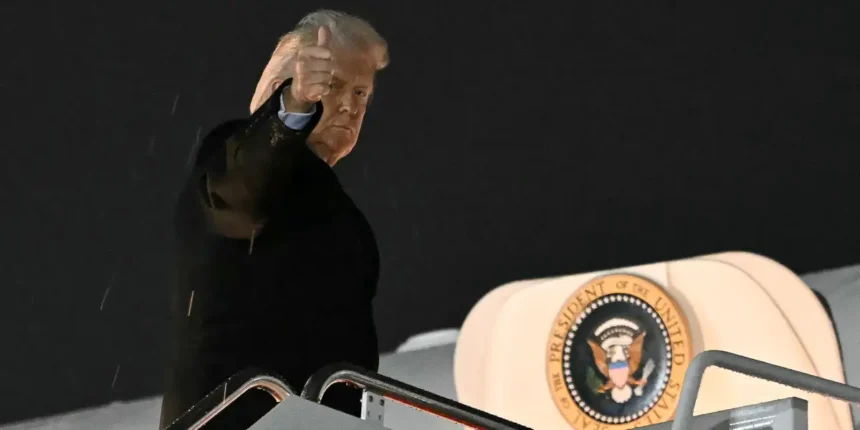
President Donald Trump has escalated his campaign against big business, specifically targeting banks with a recent proposal. On Friday, Trump announced via his Truth Social platform that he intends to call for a one-year cap on credit card interest rates, setting it at 10%. He criticized current rates, which can soar between 20% to 30%, attributing the lack of action to the Biden administration. “Please be informed that we will no longer let the American Public be ‘ripped off’ by Credit Card Companies,” Trump stated. He plans for the cap to take effect on January 20, 2026, coinciding with the one-year anniversary of what he describes as his “historic and very successful” presidency.
The White House has yet to provide a response to inquiries from various news outlets regarding the proposal. It is important to note that Trump cannot implement such a cap unilaterally; this measure would require Congressional approval. Previous attempts to cap interest rates have not yet materialized into law.
In response to Trump’s announcement, representatives from major banks like Chase and Citi directed inquiries to a joint statement issued by several trade organizations, including the Bank Policy Institute and the American Bankers Association. The statement expressed support for the goal of helping Americans access more affordable credit but warned that a 10% cap could curtail credit availability. “If enacted, this cap would only drive consumers toward less regulated, more costly alternatives,” the statement read.
The timing of Trump’s announcement coincided with remarks from Senator Bernie Sanders, who criticized Trump’s record on financial regulation. Sanders pointed out that despite Trump’s promises to cap interest rates and rein in Wall Street, actions taken under his administration have had the opposite effect, facilitating high-interest lending. “Last year, JPMorgan CEO Jamie Dimon made $770 million. Unacceptable,” Sanders stated.
During the initial months of his second term, Trump’s administration had already been marked by reduced funding for the Consumer Financial Protection Bureau, the agency tasked with ensuring fair practices in financial markets. This latest move to cap credit card interest rates is part of a broader strategy, as Trump has recently outlined several initiatives aimed at curbing corporate influence in various sectors. Earlier this week, he expressed intentions to have representatives purchase $200 billion in mortgage bonds to lower interest rates and announced restrictions against large institutional investors acquiring single-family homes, alongside an executive order aimed at limiting defense contractors’ corporate spending.