In a strategy to re-energize his economic platform, President Donald Trump has recently set his sights on Wall Street as a perceived culprit behind the rising cost of living in America. As his approval ratings languish, he seems to be pivoting away from the longstanding blame he has cast on President Joe Biden, alongside Federal Reserve Chair Jerome Powell, whose tenure is nearing its end.
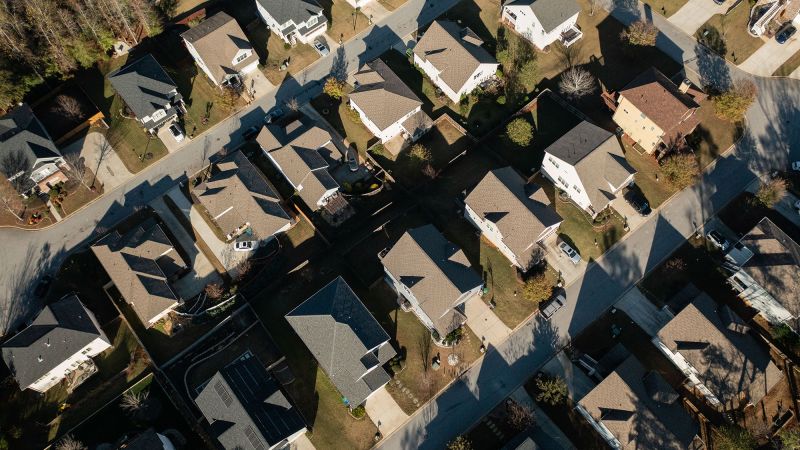
This week, Trump unveiled proposals aimed at addressing the soaring cost of housing—a significant driver of economic dissatisfaction among Americans. He outlined plans to prohibit large institutional investors from purchasing single-family homes and suggested a government buy-in of $200 billion in mortgage bonds to decrease interest rates and monthly payments for prospective homeowners.
However, experts quickly pointed out that Trump’s focus on Wall Street investors might not adequately address the fundamental issue at hand: a severe shortage of housing supply. According to research from Goldman Sachs, the nation requires approximately 4 million additional homes to restore affordability levels in the housing market.
Jake Krimmel, a senior economist at Realtor.com, critiqued Trump’s approach, labeling institutional investors as “a red herring” in discussing the broader housing crisis. He emphasized that although these investors are often vilified, they represent a minor fraction of home purchases in the U.S., particularly in comparison to smaller landlords who manage one or two rental properties for supplementary income.
Institutional investors have been purchasing real estate since the 2008 housing market collapse, aiming to capitalize on reduced property values. A Brookings Institution study indicated that from 2012 to 2019, about 240,000 single-family homes were bought by such investors. However, in 2025, these large players accounted for only 1 to 3 percent of total home purchases, a share that has been decreasing due to rising interest rates.
In some metropolitan areas, particularly in the Sun Belt, institutional ownership is more pronounced—25 percent in Atlanta, 18 percent in Charlotte, and 14 percent in Phoenix. Yet, even in these markets, experts argue that curbing institutional buying would not significantly alleviate the affordability crisis, given that housing inventory is on the rise.
Trump’s proposal to purchase mortgage-backed securities through government-sponsored enterprises like Fannie Mae and Freddie Mac aims to lower mortgage rates, similar to past Federal Reserve interventions. While this tactic could potentially provide short-term relief for borrowers, critics argue it fails to address the underlying housing supply issues. Economists, including Daryl Fairweather from Redfin, conveyed skepticism that such measures would sufficiently counteract the “lock-in effect,” whereby homeowners are less likely to sell due to prevailing interest rates.
The persistent rise in housing prices is attributed to a supply shortage, with median home prices escalating nearly 30 percent since 2020, now averaging around $410,000. Krimmel highlighted the complex nature of the housing crisis and suggested that the federal government should incentivize local authorities to enhance housing supply through streamlined permitting and increased zoning capacity.
While Trump’s narrative of combating Wall Street resonates with a certain populist sentiment, the actual path to addressing affordability challenges may require more nuanced and strategic actions—far removed from the straightforward, antagonistic rhetoric often favored in political discourse.