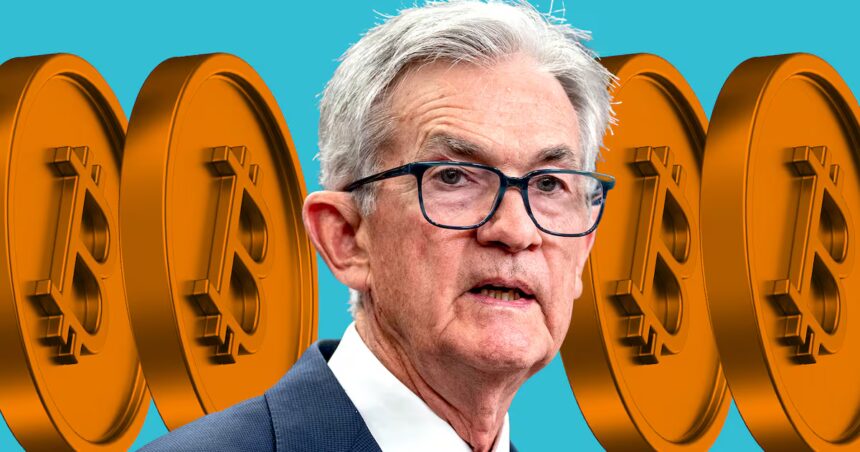
In a dramatic development within the U.S. financial landscape, Federal Reserve Chair Jerome Powell has pledged to maintain the central bank’s independence in the wake of aggressive criticism from former President Donald Trump. This clash culminates in an unprecedented legal maneuver by the Justice Department, which has served the Fed with grand jury subpoenas as part of an inquiry related to Powell’s testimony regarding office renovations given to the Senate Banking Committee in June 2025.
On Sunday, Bitcoin experienced a brief surge of 2%, climbing above the $90,000 mark before settling just above that threshold. Analysts suggest that the price movement in the cryptocurrency market directly correlates to the ongoing tensions between Trump and Powell. Investors often regard the stability of the Fed’s independent operations as a critical indicator of broader economic health, particularly for riskier assets such as Bitcoin.
Trump’s recent actions represent a significant escalation in the long-standing feud between the two figures. The former president has intensified his demands for aggressive rate cuts to bolster the U.S. economy, while Powell has adopted a more cautious stance regarding monetary policy. Historically, the central bank has been insulated from pressures of political influence, with a mandate focused on ensuring stable prices and maximum employment. Powell, addressing this unprecedented challenge, asserted, “This new threat is not about my testimony last June or about the renovation of the Federal Reserve buildings. Those are pretexts.”
The backdrop of this conflict reflects a deeper ideological divide over monetary policy, with Powell emphasizing that the threat of criminal charges is a direct consequence of the Fed prioritizing what it believes serves the public interest over presidential preferences. This clash not only raises questions about the autonomy of the Fed but has also unsettled investors, who are concerned about the implications of diminishing independence for market stability.
Peter Tillmann, an economics professor, pointed out the serious nature of Powell’s public appeal on a Sunday, labeling it indicative of either a financial crisis or another critical situation. The central bank’s recent decisions have already resulted in interest rates reaching their lowest levels in three years, a measure taken in December to stimulate economic growth.
Despite these tailwinds propelling stocks and gold to record highs, the cryptocurrency sector has not mirrored this upward trajectory, with the overall crypto market witnessing a $1 trillion decline from its all-time peak last October. As attention now turns to the upcoming Open Market Committee meeting on January 28, where the CME FedWatch tool suggests a stabilization of interest rates, the implications of this clash between Powell and Trump for the financial landscape remain a pivotal issue for investors and policymakers alike.