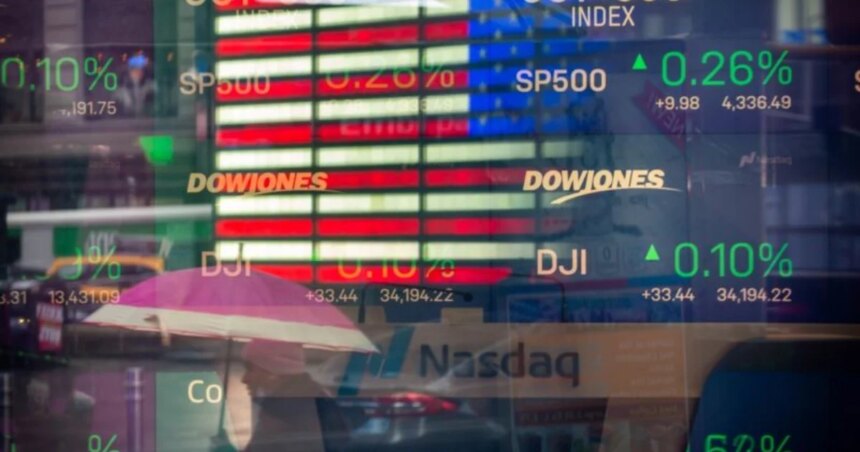
In a candid discussion among financial experts, John Rogers, the founder and co-CEO of Ariel Investments, has emerged as the most pessimistic voice regarding the U.S. economy, projecting the possibility of a minor recession by year’s end. He expressed concerns over the stock market’s current valuation, noting that elevated price-to-earnings ratios indicate a correction is long overdue. Rogers anticipates a significant downturn, forecasting a drop of 15% to 20% in the Dow by 2026. Drawing parallels with past financial upheavals, he referenced the aftermath of the internet bubble and the 2008 global crisis, emphasizing the unpredictable and often severe nature of market corrections.
“Experience shows that the negative surprises can be far more dramatic than one might remember,” Rogers cautioned, highlighting a common underestimation of potential risks. He also pointed out the disproportionate influence of a small number of technology stocks in today’s market, suggesting that the current index fails to accurately represent the broader spectrum of American business.
Contrastingly, Diane Swonk, chief economist at KPMG, likened the U.S. economy to the Roman god Janus, who has two faces, indicating a duality in the economic landscape. Although the economy continues to expand, Swonk noted increased stress within the labor market, raising flags about job security as a significant factor for her outlook on 2026. She warned of a potential stock market bubble and predicted the Dow would decline to approximately 43,000 by the year’s end, which would represent a decrease of about 12.6% from its current level.
On the other hand, Bob Froehlich, the former vice chairman of Deutsche Asset Management, dismissed the bearish sentiment expressed by Rogers and Swonk. He maintained an optimistic view, forecasting a sustained rally in the stock market that could elevate the Dow to an impressive 57,067. Froehlich attributed this anticipated growth to robust corporate profits, suggesting that businesses are poised to bounce back after overreacting to tariff announcements by the Trump administration in 2025. He pointed out positive trends in manufacturing, energy, and technology sectors, while highlighting the dollar’s enduring status as a global reserve currency.
Moreover, Froehlich anticipates that a series of interest rate cuts could further bolster the market rally, suggesting that the upcoming appointment of the Federal Reserve chairman—likely influenced by political motivations—will play a pivotal role. Dismissing the recent controversies surrounding Fed independence, he deemed them insignificant, reiterating the political nature of the position.
Swonk, however, urged caution about the potential consequences of political influence on economic health. “History is uncomfortable,” she remarked, warning that succumbing to the pressures of politicians can lead to inflationary setbacks or worse outcomes, such as stagflation. While she predicts three interest rate cuts in 2026 and GDP growth of 2.4%, she argues that any job gains from artificially low interest rates would likely be short-lived, underscoring the need for a more discerning approach to economic policy in light of ongoing uncertainties.