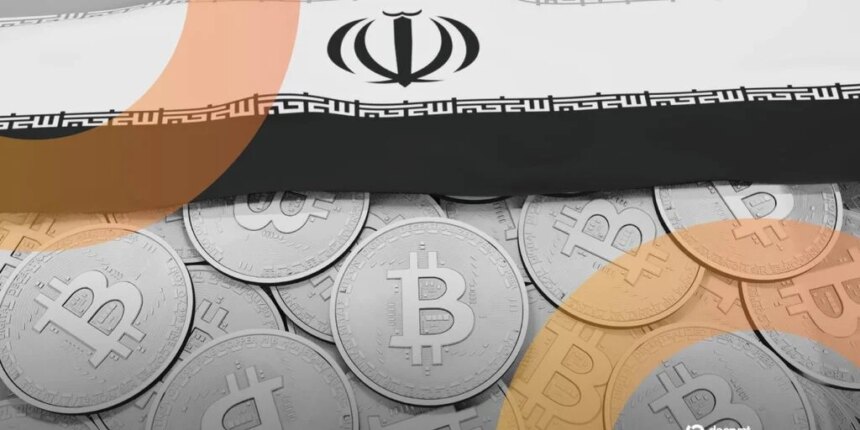
Iran’s cryptocurrency landscape has experienced substantial growth, reaching an estimated value of approximately $7.78 billion in 2025, according to a detailed report from blockchain analytics firm Chainalysis. This noteworthy increase signifies a sharp rise from the previous year, reflecting a dual role for digital assets in the country—serving both as a refuge for civilians facing economic turmoil and as a channel for state-linked entities navigating international sanctions.
As the nation grapples with severe economic instability and rampant inflation rates between 40% and 50%, cryptocurrencies have become crucial for many Iranians. Chainalysis highlights that Bitcoin, in particular, has emerged as the preferred safe-haven asset during times of crisis. This trend was particularly evident in late December 2025, when mass protests erupted and the government imposed nationwide internet blackouts. During this period, there was a significant surge in Bitcoin withdrawals from exchanges, indicating a pivot towards self-custody as state-controlled financial systems became increasingly unreliable.
Eric Jardine, Head of Research at Chainalysis, emphasized the importance of Bitcoin in this context, noting its appeal as a “flight to safety.” He pointed out that while Bitcoin dominates this space, stablecoins are also frequently utilized for personal remittances due to their efficiency and cost-effectiveness, especially vital in an environment marked by hyperinflation.
Despite the uncertainty surrounding the future of such cryptocurrency investments, Jardine suggested that a return to local currency would likely not be attractive for most Iranians due to the substantial devaluation of the rial. Observing patterns from historical economic crises, experts believe that once the populace integrates digital assets into their financial practices, reverting back to traditional banking systems becomes improbable.
The report also revealed concerning trends related to the Islamic Revolutionary Guard Corps (IRGC), which accounted for over 50% of all crypto value received in Iran during late 2025. This indicates a significant link between state-sponsored actors and the burgeoning crypto economy. Analysts assert that the IRGC’s adoption of Bitcoin sends a strong message to both the international community and Iranian citizens about its perceived value.
In light of these findings, Bradley Rettler, a senior fellow at the Bitcoin Policy Institute, highlighted that Bitcoin’s allure in repressive financial environments often drives increased engagement among citizens. With fears of governmental overreach and currency devaluation, many find solace in the decentralized nature of Bitcoin. Furthermore, the rise in crypto-solutions among sanctioned entities illustrates that Bitcoin has firmly established itself in Iran’s economic fabric.
Overall, the dual narratives of governmental entities increasingly engaging in cryptocurrency use alongside civilians seeking financial shelter paint a complex picture of Iran’s evolving economic landscape, marked by unrest, innovation, and resilience.