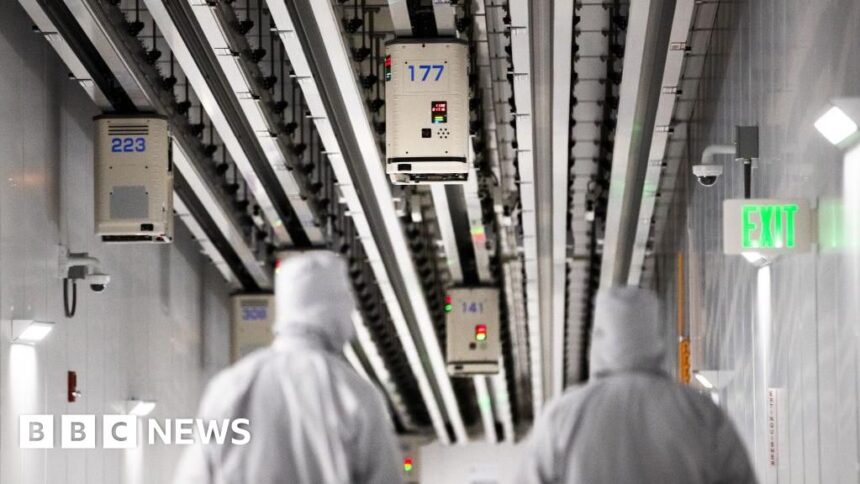
In a significant move to bolster the domestic semiconductor industry, the U.S. has reached an agreement to reduce tariffs on goods from Taiwan to 15%. This reduction is part of a larger strategy aimed at attracting substantial investments—estimated at hundreds of billions of dollars—to enhance U.S. semiconductor production capabilities.
The U.S. Commerce Department announced that Taiwanese semiconductor and technology firms are set to invest a minimum of $250 billion (£187 billion) in direct investments. This agreement is particularly noteworthy as it also includes tariff exemptions for Taiwanese semiconductor companies that decide to invest in the United States.
The urgency behind these developments stems from the semiconductor shortages experienced during the Covid-19 pandemic, which highlighted vulnerabilities in the supply chain. In a recent interview on CNBC, Commerce Secretary Howard Lutnick emphasized the importance of this agreement, asserting it would significantly contribute to America’s goal of self-sufficiency in semiconductor manufacturing. He stated, “We’re going to bring it all over,” signaling a committed effort to shift production back to U.S. soil.
The American government has already dedicated vast financial resources to support the semiconductor sector, with subsidies in the hundreds of billions of dollars over the past few years. These initiatives have attracted big players like TSMC, Taiwan’s leading semiconductor manufacturer. Recently, TSMC announced plans to accelerate its investments in the U.S., having previously opened a chip manufacturing facility in Arizona, with $40 billion in government assistance from the Biden administration. This facility produces chips for major tech companies such as Nvidia, Apple, and AMD.
The latest trade deal not only aims to ensure more direct investments but also hopes to encourage smaller firms to re-establish their operations in the U.S. Alongside the investments from private companies, the Taiwanese government is expected to provide $250 billion in financing to support these initiatives.
Taiwan’s strategic significance extends beyond the realm of semiconductors. The self-governed island, which is claimed by China, had sought a resolution to the tariffs it faced from the U.S., which were set at 20% last year. The new 15% tariff aligns with rates imposed on imports from other major U.S. trading partners including Japan, South Korea, and the European Union. These tariffs are a continuation of discussions that began under the Trump administration, focusing on perceived trade imbalances.
Amid these developments, the U.S. Supreme Court is currently deliberating on a challenge from businesses and states aiming to overturn the tariffs that they argue were imposed through an overreach of presidential authority. Meanwhile, the Trump administration had previously hinted at broader tariffs targeting the semiconductor industry under the guise of national security, although such measures have not yet been enacted, alleviating concerns from U.S. firms reliant on imports.
As the landscape evolves, American semiconductor manufacturer Intel faces challenges of its own, particularly in producing advanced chips for artificial intelligence applications. Despite an unexpected investment from the U.S. government in Intel, which acquired a 10% stake, the company is reportedly on track to eliminate thousands of jobs, highlighting the ongoing struggles within the sector, which saw over 17,000 jobs lost last year despite ongoing efforts to stimulate growth in the industry.