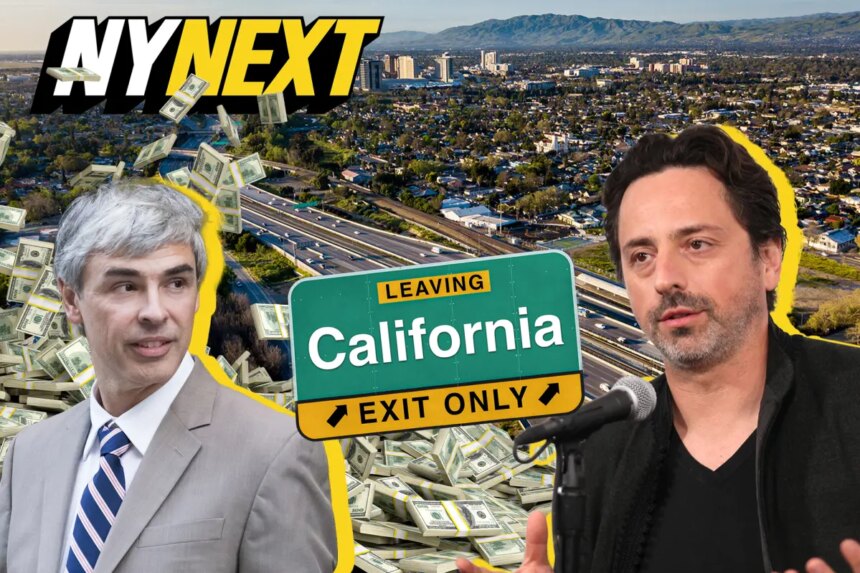
California’s proposed wealth tax is generating significant backlash in Silicon Valley, alarmed entrepreneurs, and tech leaders are seriously weighing their future in the state. The controversy is not solely about the headline 5% rate but rather revolves around nuanced provisions that could have profound implications for tech founders.
Central to the discontent is the so-called “billionaire tax,” which would tax individuals based on the voting shares they hold, treating these shares as ownership stakes. This means that founders who retain control over their companies through dual-class stock structures would find themselves liable for taxes on extensive voting rights, even if their actual economic stake in the firm is minimal. Jared Walczak, a tax expert at the Tax Foundation, noted that such treatment could impose significant burdens on innovators and potentially deter them from launching new startups.
The ramifications of these provisions extend to prominent figures in Silicon Valley. For instance, Google co-founders Larry Page and Sergey Brin, who both notably retain significant control through dual-class stock, could find themselves taxed on the voting shares they possess rather than their actual ownership stake. Page, for example, controls around 30% of Google’s voting power while owning merely about 3% of the stock. Under the proposed tax scheme, he would face tax liabilities based on the 30% governance stake, leading to substantial taxation on what many consider “phantom wealth.”
Calculating the tax burden under this framework poses challenges, particularly for startups that are not yet publicly traded. Joe Malchow, a venture capital partner in the Bay Area, expressed concern about the negative impact on early-stage founders, particularly those attempting to tackle critical issues such as California’s energy crisis. He mentioned a recent venture involving SpaceX alumni aiming to develop technologies that would help stabilize California’s power grid. The founder’s voting shares translating to 30% control could lead to significant tax implications, even without selling any shares.
Malchow emphasized how this proposal risks discouraging talented entrepreneurs from staying in California, as the tax could undermine their ability to maintain ownership of their creations. The situation could mirror prior financial crises where individuals had to give up significant assets, raising alarms about potential economic fallout.
While some figures within the startup ecosystem, including Nvidia founder Jensen Huang, have voiced support for the tax, many others—including figures like Garry Tan of Y Combinator—have taken to social media to challenge its practicality and implications. Tan recently highlighted that the existing proposal could potentially confiscate large portions of wealth from significant players in the tech industry, complicating the state’s ability to retain its innovative leaders.
As the tax proposal awaits potential placement on the ballot in November, its retroactive applicability based on residency dating back to January 1, 2026, has already prompted concerns. Reports indicate that since the beginning of the year, approximately $1 trillion in wealth has exited California, with prominent founders contemplating relocation.
Governor Gavin Newsom, despite some pressure from the left, has indicated he would oppose the initiative, a move that reflects a growing recognition of the need to maintain a friendly climate for tech entrepreneurship. Observers in the field suggest that taxing founders based on control rather than actual wealth could create a daunting environment, potentially prompting a mass exodus from the state.
Tech leaders remain steadfast in their belief that the control they exert over their businesses is crucial to their identity as entrepreneurs. Many see the proposed wealth tax as a threat not just to their financial standing but also to the innovative spirit that has defined Silicon Valley, leading to serious discussions around future business decisions and potential relocation.