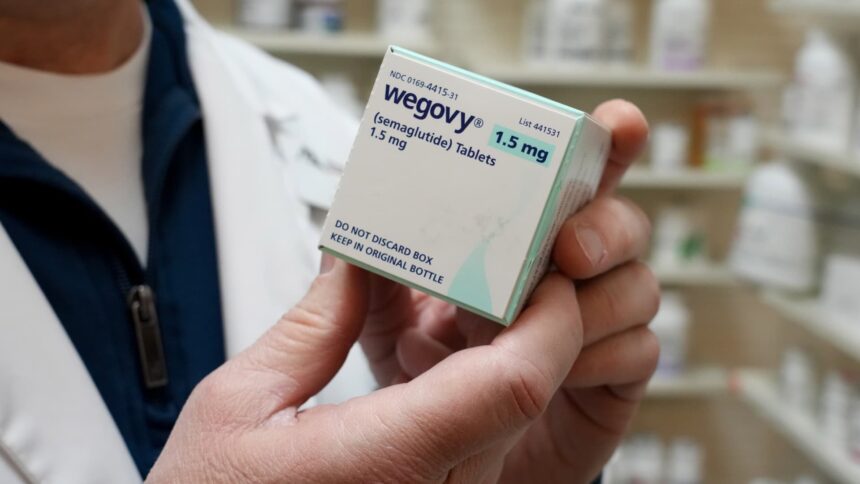
Shares of Novo Nordisk experienced a notable increase of over 5% on Friday, following the release of early prescription data that suggests a promising debut for the company’s new GLP-1 oral medication for obesity, Wegovy. Analysts from TD Cowen characterized the launch as a “solid start,” emphasizing, however, that one data point alone cannot establish a definitive trend. They expressed the need for additional data to accurately evaluate the initial demand for Wegovy, which officially became available in the U.S. on January 5, shortly after receiving approval in late December.
The positive early indications come as Novo Nordisk aims to reclaim market share from its primary competitor, Eli Lilly, in the rapidly expanding obesity and diabetes treatment market. Eli Lilly secured the majority of market share in early 2025 and is closely following Novo Nordisk in the oral drug segment, preparing to unveil its own obesity medication in the coming months.
According to David Risinger, an analyst at Leerink Partners, Wegovy had roughly 3,100 prescriptions filled in its first week of availability, based on IQVIA data for the week ending January 9. In a comparison, Eli Lilly’s injection, Zepbound, documented about 1,300 prescriptions in its first week and around 8,000 in the second week following its U.S. approval at the end of 2023.
Contrastingly, TD Cowen analysts reported slightly higher figures from Symphony, stating that approximately 4,290 prescriptions were filled for Wegovy during its initial full week. The majority of these prescriptions were for the starting dose of the drug, highlighting robust early interest. They noted that the data potentially excludes prescriptions filled through Novo Nordisk’s direct-to-consumer pharmacy or telehealth partners. In comparison, Zepbound saw about 1,900 prescriptions during its first full week.
Michael Nedelcovych, a TD Cowen analyst, pointed out that if this Symphony data is accurate, Wegovy is already surpassing its injectable counterparts at the same stage in their launch. However, he cautioned that a clearer picture will emerge in the coming weeks, although meaningful comparisons may take two to three quarters to materialize.
Looking ahead, Nedelcovych urged for a comprehensive view of the direct-to-consumer channel, which he believes offers “significant promise” for the pill’s rollout. Moreover, he noted that the competitive landscape may shift once Eli Lilly’s oral medication, orforglipron, is introduced in the market, suggesting that Novo Nordisk’s drug may face challenges despite its head start. This is especially pertinent as Wegovy is a peptide medication that comes with dietary guidelines, requiring users to abstain from food or drink for 30 minutes after taking the pill with water. In contrast, Eli Lilly’s forthcoming pill, being a small molecule drug, does not impose similar consumption restrictions.