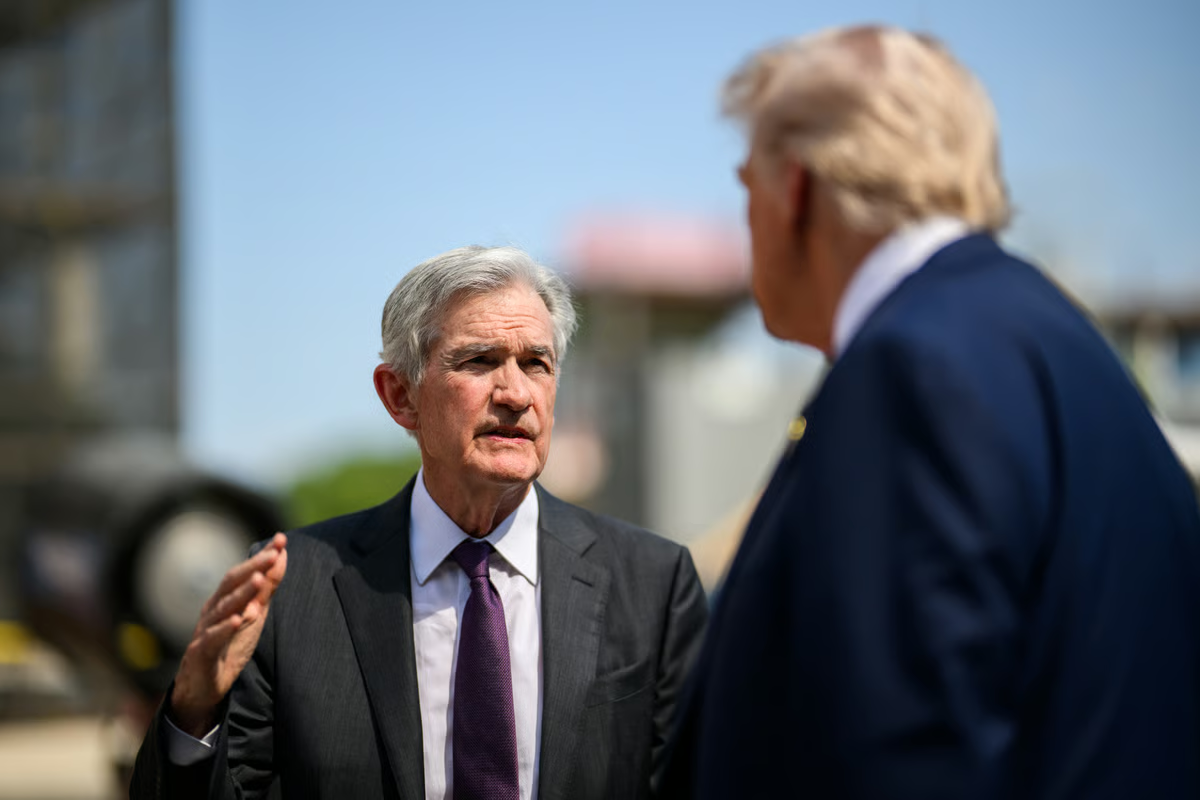
A significant rift has emerged within the Federal Reserve, posing serious concerns for the stability of Wall Street. As the bull market enters its third year, marked by impressive gains in major stock indexes, signs of underlying turbulence suggest that the financial landscape may not be as secure as it seems.
In 2026, the Dow Jones Industrial Average, the S&P 500, and the Nasdaq Composite recorded remarkable gains of 13%, 16%, and 20%, respectively. Contributing to this optimism are advances in artificial intelligence, the potential of quantum computing, and expectations of further reductions in interest rates. However, beneath the surface, skepticism prevails, primarily due to the Federal Reserve’s internal discord.
The tension escalated when the U.S. Justice Department launched a criminal investigation into Fed Chair Jerome Powell. This unprecedented action revolves around Powell’s testimony about a costly renovation of the central bank’s headquarters, raising questions about the integrity of his statements. Responding promptly, Powell condemned the inquiry, attributing it to the Fed’s commitment to setting interest rates based on public interest rather than political pressure.
The conflict between Powell and President Donald Trump has been brewing for over a year, primarily focusing on the Federal Open Market Committee’s (FOMC) approach to interest rates. Trump has vocally urged the FOMC to significantly lower rates, arguing that such a move could relieve consumer credit burdens and stimulate economic growth. Lower interest rates generally encourage borrowing and spending, creating a positive feedback loop for the economy.
Conversely, persistently high inflation, particularly in housing, has constrained the FOMC’s ability to lower rates, leading to friction between Powell and Trump. While this rivalry garners media attention, the more pressing concern is the historical level of dissent within the Fed itself.
The FOMC, tasked with maximizing employment and stabilizing prices, typically operates under a consensus model. However, recent meetings have highlighted a troubling trend: dissenting opinions have become frequent, with the last two meetings showcasing conflicting stances on interest rate adjustments. This division among members poses a greater risk to market stability as investors may lose confidence in the Fed’s decision-making process.
Recent history shows that a unified FOMC provides a stabilizing effect on financial markets. In contrast, a lack of agreement among its members raises fears about the Fed’s effectiveness in navigating economic challenges. The situation is exacerbated by the impending end of Powell’s term, leaving questions about future leadership and policy direction.
Despite ongoing discussions about potential bubbles, particularly relating to artificial intelligence, the market’s most significant concern lies in the recognition of the Fed’s internal divisions and the repercussions for economic stability. Investors are beginning to realize that this lack of cohesion may lead to greater volatility in the future, emphasizing a need for a strategic approach to monetary policy in the face of uncertainty.