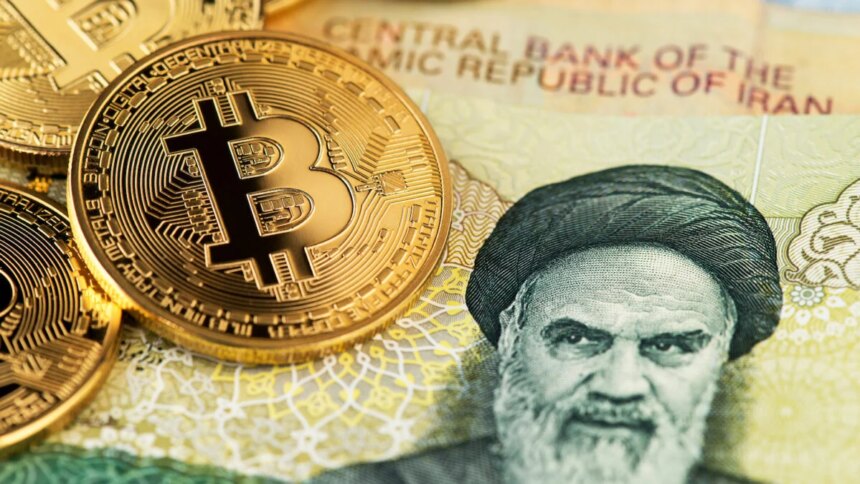
A recent report from blockchain analytics firm Chainalysis has unveiled a dramatic surge in Bitcoin adoption within Iran, coinciding with ongoing nationwide unrest and protests. The report highlights a notable increase in withdrawals from cryptocurrency exchanges to unverified Bitcoin addresses. This trend suggests that many Iranians are turning away from centralized financial systems in favor of a decentralized, peer-to-peer digital currency, motivated by economic instability and governmental control.
Specifically, the report reveals a staggering 262% rise in the value of Bitcoin withdrawals exceeding $10,000 into presumed self-custodial wallets since the onset of protests. Contributing factors include the steep decline of the Iranian rial and a growing necessity for people to transact outside government-sanctioned financial platforms.
Historical correlations are drawn in the report, marking patterns of heightened crypto activity during previous significant domestic and geopolitical crises, such as the Kerman bombings in January 2024 and Iran’s missile strikes against Israel in October 2024. The report also references incidents like a $90 million hack of Nobitex, the largest crypto exchange in Iran, amid the recent 12-day war, underscoring the volatility surrounding cryptocurrency use in times of conflict.
Chainalysis asserts that the spike in Bitcoin withdrawals mirrors a global trend observed in regions experiencing war and economic distress. The firm has previously documented similar patterns in countries like Ukraine, Argentina, and Venezuela, all of which have seen increased cryptocurrency adoption during crises.
Iran’s tumultuous socio-economic landscape, characterized by rampant currency devaluation and discontent over governmental corruption and mismanagement, has fueled ongoing protests. The population’s embrace of Bitcoin can thus be viewed not only as a financial move but also as a form of protest against a failing traditional financial system.
Interestingly, the Iranian regime itself has leveraged cryptocurrency to circumvent economic sanctions and launder funds. The Chainalysis report highlights that the Islamic Revolutionary Guard Corps (IRGC) is responsible for approximately half of the crypto transactions in Iran, estimated to be around $7.78 billion.
In addition, reports have indicated that two UK-based crypto exchanges may have acted as fronts for the Iranian regime, while other studies have revealed Iranian involvement in Bitcoin mining as a means to monetize the nation’s energy resources. This paradox outlines the dual nature of Bitcoin within authoritarian regimes: while it serves as a tool for state actors to evade restrictions, it simultaneously empowers citizens seeking financial autonomy.
Beyond cryptocurrency, other technologies have played a significant role during the protests. Internet outages, imposed by the government, have been partially mitigated by Starlink technology, allowing critical information to flow outside of Iran. Additionally, the emergence of mesh-networking applications like Bitchat and its fork, Noghteha, has seen increased acceptance among the population, although Noghteha’s closed-source components and fundraising practices have sparked controversy.
This evolving situation exemplifies the complex relationship between cryptocurrency and political power, revealing how digital currencies can serve as both a mechanism of state control and a means for individuals to assert their financial independence in the face of oppressive systems.