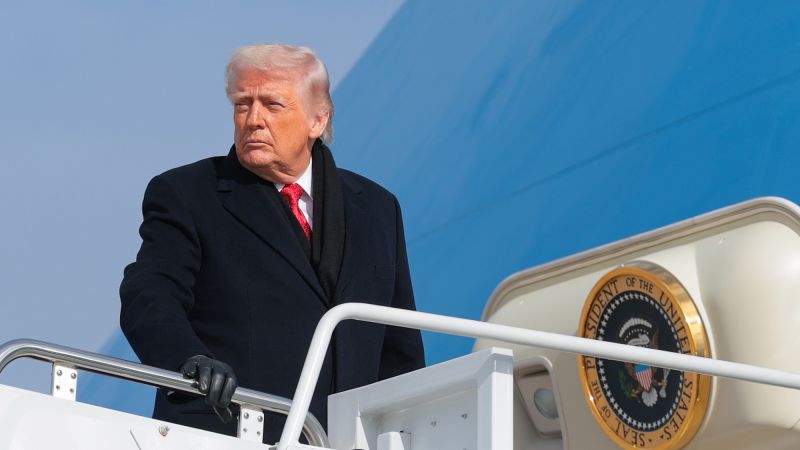
President Donald Trump has come under scrutiny following a recent financial disclosure revealing significant investments in Netflix and Warner Bros. Discovery, coinciding with a monumental merger announcement between the two companies. This disclosure, submitted to the Office of Government Ethics, details 191 financial transactions made during a period from November 14 to December 19, which includes high-value purchases of corporate and municipal bonds.
The report indicates that Trump invested between $1 million and $5 million in Netflix and Warner Bros. Discovery, raising concerns among ethics experts about potential conflicts of interest. Despite the White House stating that Trump’s financial portfolio is managed by third-party institutions, experts question whether such investments are appropriate given Trump’s direct involvement in regulatory decisions regarding the merger.
Ann Skeet, senior director of leadership ethics at the Markkula Center for Applied Ethics, expressed concern over the implications of Trump’s financial interests in companies he is ostensibly overseeing. She highlighted that the president should prioritize public interests, emphasizing the potential ethical dilemma posed by his financial stakes in these corporations.
Initially, the Trump Organization had put forth an ethics plan stating that Trump would not engage in the management of his businesses. However, this plan did not necessitate divestment from his holdings or disqualification from decisions impacting those assets. Richard Painter, a former chief ethics lawyer for President George W. Bush, pointed out that Trump’s actions diverge from traditional practices where previous presidents took measures to avoid conflicts of interest.
The specifics of Trump’s investments include debts in Netflix and Discovery Communications, with amounts ranging between $250,001 and $500,000 for each purchase made on December 12 and December 16. This investment comes just days after Netflix announced its intention to acquire Warner Bros. Discovery for $72 billion, a deal that would encompass the consolidation of major studio assets, including the HBO streaming service.
Warner Bros. Discovery serves as the parent company for CNN; however, CNN will not be part of the Netflix transaction. The merger’s planned execution includes a proposed split into two publicly traded entities by 2026. Netflix aims to finalize the acquisition of the Warner half, while the Discovery Global section will retain CNN and several other cable channels.
In the context of competitive bids, Paramount has attempted to stage a hostile takeover of Warner Bros. Discovery to obstruct the Netflix sale. Amid this corporate tug-of-war, Trump previously indicated his intention to be involved in governmental regulatory decisions related to the proposed merger, further complicating the ethical landscape of his investments.
In addition to the media assets, Trump’s financial disclosures encompass investments in major corporations such as Boeing, Macy’s, Victoria’s Secret, and General Motors, amplifying the array of potential conflicts he may face as the leader of the country. As the situation unfolds, scrutiny over Trump’s financial dealings continues, highlighting the intersection of personal investments and public duty at the highest levels of government.