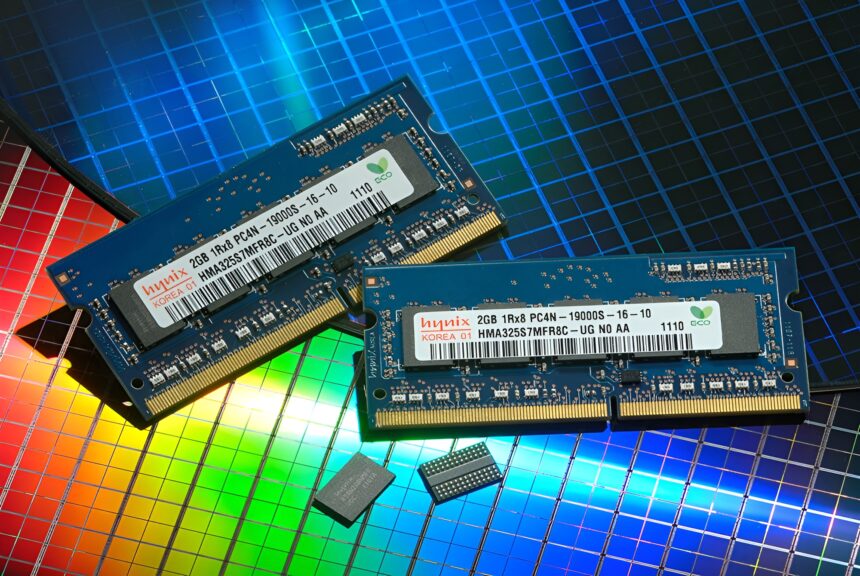
In a significant development for the semiconductor industry, U.S. Commerce Secretary Howard Lutnick has indicated that the U.S. government may impose a remarkable 100% tariff on offshore producers of dynamic random-access memory (DRAM). This move aligns with the administration’s broader strategy to bolster domestic manufacturing, particularly in high-value sectors like semiconductors and artificial intelligence (AI).
During a recent groundbreaking ceremony for a new Micron facility in New York, Lutnick emphasized the importance of American manufacturing, stating, “Everyone who wants to build memory has two choices: They can pay a 100% tariff, or they can build in America.” Although specific companies targeted by these tariffs have not yet been identified, major DRAM suppliers such as Samsung and SK hynix could face substantial implications.
This proposed tariff marks the first instance where the U.S. has aimed directly at DRAM suppliers, a sector critical for the rapidly growing AI market. The increased demand for memory chips has already contributed to soaring prices, and adding a tariff could severely strain the industry’s ability to meet production needs.
While Samsung has made some commitments in semiconductor manufacturing, including frontend and backend processes, their plans do not currently include building a dedicated memory fabrication facility in the U.S. In contrast, SK hynix has announced a $4 billion investment in West Lafayette, Indiana, primarily focused on 2.5D packaging and research and development, with no plans for DRAM production lines at this site. Micron, a leading U.S. manufacturer, remains the only major company actively producing DRAM chips domestically.
Additionally, Taiwanese DRAM manufacturers, such as Nanya Technology and Winbond Electronics, may also be affected by these proposed tariffs. Given the fragile state of the DRAM supply chain, this potential policy could introduce further complications for an industry already challenged by scaling production to meet increasing demands.
The uncertainty surrounding these tariffs adds another layer of complexity to an already volatile market, necessitating close attention from industry stakeholders as they navigate the potential ramifications of this significant policy shift.