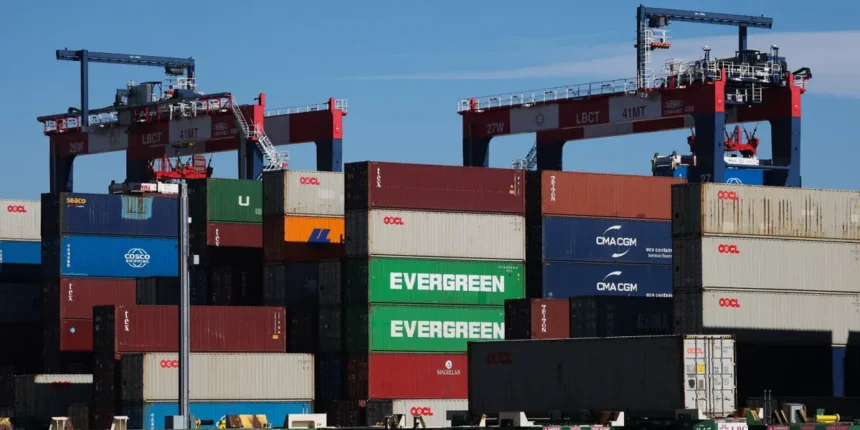
A recent study by the Kiel Institute for the World Economy reveals that nearly all the burden of U.S. tariffs—96%—is being shouldered by American consumers and importers. The research suggests that the $200 billion in customs revenue generated in 2025 has primarily functioned as a tax on U.S. buyers, contradicting previous assertions made by former President Donald Trump that these costs would principally be borne by foreign exporters.
The study, which scrutinized over 25 million shipment records amounting to nearly $4 trillion from January 2024 to November 2025, indicates a “near-complete pass-through” of tariff costs onto U.S. consumers. The findings show that U.S. import prices rise almost equivalently to the tariffs imposed, which in turn leads to a contraction in trade volumes.
Past analyses from institutions like Harvard Business School and Yale’s Budget Lab have echoed these findings, highlighting that American buyers are effectively financing the tariffs, which were implemented as part of Trump’s aggressive trade strategies targeting various countries, including China, India, and members of the European Union.
According to the Kiel Institute, the series of tariffs first impacts American importers and wholesalers before cascading down to manufacturers and retailers. These entities are faced with the decision of either absorbing the increased costs or passing them on to consumers. As a result, American households are experiencing higher prices not just for imported goods but also for domestic products that rely on foreign components. Moreover, the study noted a decrease in the availability of certain goods across the United States.
In the midst of ongoing tariff discussions, Trump remains steadfast in his support for such policies. In recent comments, he threatened to impose further tariffs on countries like Denmark unless they agree to specific negotiations involving Greenland.
The long-term sustainability of these tariffs remains uncertain, as the Supreme Court is anticipated to soon deliver a decision regarding the legality of several tariffs enacted under an emergency national security statute. Trump has warned that any reversal of these tariffs would disadvantage the U.S. economy.