As the political landscape shifts regarding artificial intelligence (AI) regulation, various factions within the Right are vying for influence, drawing attention from key policymakers and experts. Former Chief White House Strategist Steve Bannon described the current environment as one of intense competition in Washington, particularly around the administration’s stance on AI.
Insiders report that the topic of AI is a focal point of controversy within the Trump administration, as the Right grapples with establishing a cohesive conservative policy on the issue. The complexities arise from differing perspectives among conservatives about the implications and regulation of AI technologies. The influence of Big Tech is also a factor, with major companies lobbying for favorable policies that prioritize their interests rather than broader societal concerns.
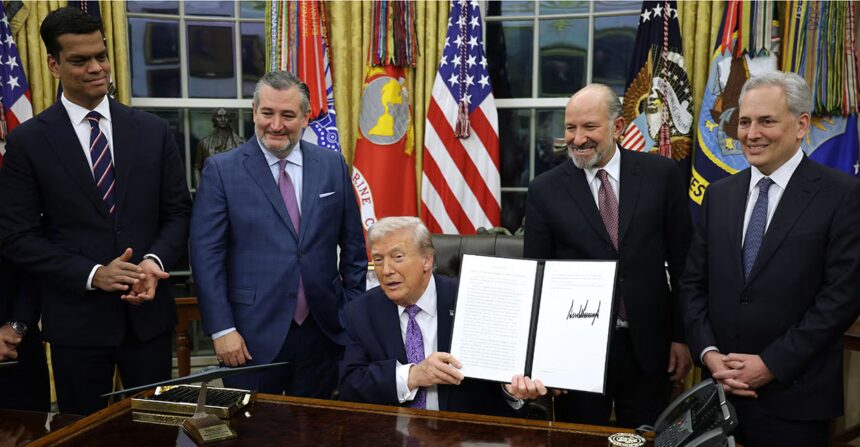
This division became evident when President Trump signed an executive order mandating the creation of an AI litigation task force to push back against state-level regulations that could conflict with federal policies. This decision has sparked dissent among influential conservatives, including Florida Governor Ron DeSantis and Missouri Senator Josh Hawley, who are concerned about safeguarding blue-collar jobs and addressing the rapid changes AI could bring to the workforce.
Tim Estes, founder of AngelQ, characterized the divide as a clash between free-market advocates and those prioritizing the protection of American jobs and family values. The pro-family faction is increasingly aligning itself with populist and national security interests, who share concerns about both job displacement and foreign competition, particularly from China.
Amidst these factions, the “accelerationist coalition”—supporters of rapid technological advancement—appears to have strong ties in the White House. Some experts have pointed to venture capitalist Marc Andreessen as a potential architect of this movement within the Republican Party. His connections to the administration have raised fears among some that the AI policy may favor corporate interests over ethical considerations.
On the other end of the spectrum, populists within the coalition are worried about job losses among younger Americans, particularly those entering the workforce. Recent polling indicates that Trump’s approval ratings among Gen Z voters have plummeted, attributed in part to concerns over AI’s impact on job opportunities. As the technology develops, experts warn that its potential to replace jobs may increase, necessitating protective measures.
The pro-family coalition seeks to ensure that discussions about AI reflect broader societal values rather than purely technological advantages. Michael Toscano, director of the Institute for Family Studies, advocates for more diverse voices in the AI regulatory debate, believing that Silicon Valley lacks the moral guidance needed to navigate these complex issues.
Furthermore, the national security angle adds another layer to the debate, as figures like Hawley express alarm over China’s increasing involvement in AI development. They argue for stricter controls on technology sharing with China and have introduced legislation aimed at blocking imports of AI technology from the country.
In this framework of competing interests, Sen. Marsha Blackburn of Tennessee has introduced the “Trump America AI Act,” which aims to create a unified federal standard for AI regulation. This bill seeks to balance the interests of children, creators, and conservative communities, allowing various factions within the Trump coalition, aside from Big Tech, to rally behind a single piece of legislation.
Blackburn emphasizes the necessity of establishing regulations to prevent potential harms from AI while still harnessing its benefits across different sectors, from healthcare to education. The continuing dialogue around AI regulation reflects broader societal values and concerns, positioning the future of AI regulation at the intersection of technological advancement and ethical considerations.