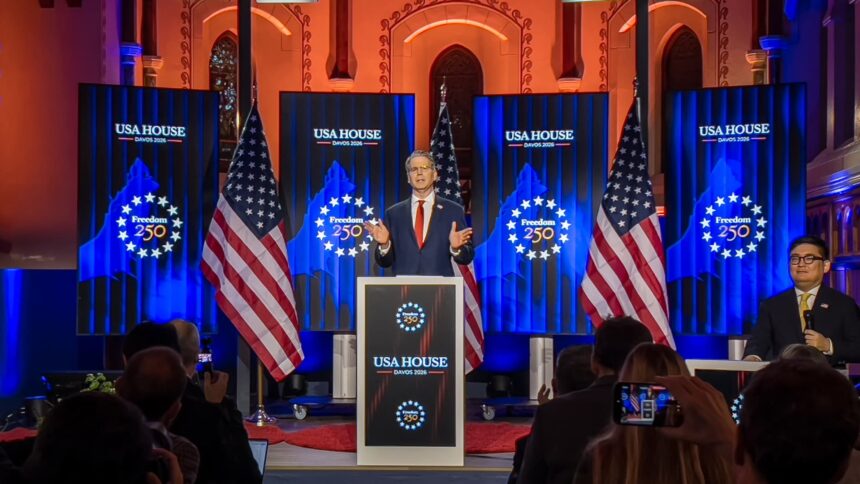
At the World Economic Forum in Davos, U.S. Treasury Secretary Scott Bessent made headlines by dismissing Denmark’s investment in U.S. Treasury bonds as inconsequential. This declaration came amid escalating tensions between President Donald Trump and European leaders regarding Greenland, igniting fears within financial markets and resulting in a notable decline in U.S. stocks and bonds.
In a backdrop of economic uncertainty, President Trump recently threatened to impose 10% tariffs on eight European countries in his controversial push to assert American interest in Greenland, with plans to increase the levies to 25% by February 1. This concern about trade relations is reflected in the market dynamics, as investors reacted to these developments with unease, leading to significant fluctuations in bond yields.
As part of their response to the perceived risks in U.S. financial stability, Danish pension operator AkademikerPension announced the sale of $100 million in U.S. Treasuries, citing the “poor U.S. government finances” as a motivating factor. Anders Schelde, the firm’s chief investment officer, articulated that the decision was influenced by a declining confidence in U.S. fiscal health.
When questioned about the potential withdrawal of European investments from U.S. Treasuries, Bessent maintained a dismissive stance. “That is less than $100 million. They’ve been selling Treasuries for years; I’m not concerned at all,” he said, asserting that this withdrawal would not pose a significant threat. He emphasized the overall strength of U.S. financial markets, pointing out that the country continues to attract “record foreign investment” in Treasuries.
Bessent attributed the notion of European divestment to a single analyst’s report from Deutsche Bank and suggested that this narrative has been exaggerated by media coverage. He further disclosed that the CEO of Deutsche Bank had contacted him to clarify that the bank does not support the view expressed by that analyst.
The geopolitical stakes surrounding Greenland have drawn attention as the U.S. positions itself amid growing confrontation over Arctic resources and trade routes with Russia and China. Bessent framed the acquisition of Greenland as fundamental to U.S. national security, urging allies to recognize the strategic importance of the territory.
In closing, he drew parallels with past U.S. actions, recalling the purchase of the U.S. Virgin Islands from Denmark during World War I, which underscored the strategic importance recognized by the U.S. at that time. The unfolding drama around Greenland and investment dynamics continues to evoke strong reactions across financial markets and political landscapes.