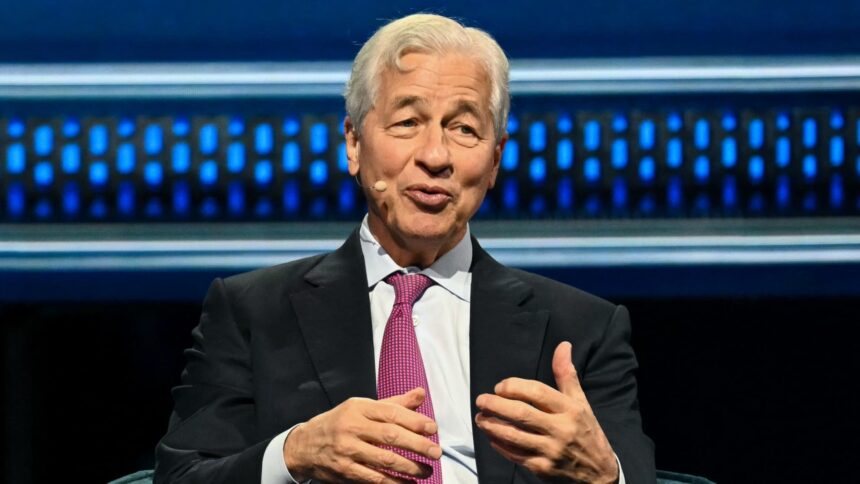
During a recent panel discussion at the World Economic Forum in Davos, Switzerland, JPMorgan Chase CEO Jamie Dimon expressed views on President Donald Trump’s proposal for a 10% cap on credit card interest rates. Dimon proposed a test of this cap in two specific states—Vermont and Massachusetts. His remarks came in response to Trump’s directive for banks to consider voluntarily reducing their interest rates.
Dimon’s skepticism was evident as he stated, “It would be an economic disaster.” He warned that such a drastic measure could severely impact the credit card business, affecting a significant portion of the American population, specifically around 80%. Several major credit card issuers, when contacted for their stance, refrained from publicly opposing the proposal, indicating no immediate changes were made to their interest rates.
The banking sector has voiced strong opposition to Trump’s call for voluntary rate reductions, arguing that implementing price controls would lead to a contraction in available credit. This sentiment has found traction among some Republican lawmakers, including House Speaker Mike Johnson. Analysts believe that actual legislative action would be required for a nationwide implementation of such a cap.
In his remarks, Dimon also humorously suggested that imposing price controls in only Vermont and Massachusetts could serve as a practical experiment. Both states are home to Senators Bernie Sanders and Elizabeth Warren, who have championed the idea of capping credit card rates. Dimon implied that the effects of such a policy would teach “the left” an important lesson, emphasizing that the fallout would not primarily affect credit card companies, but would rather impact various sectors, including restaurants, retailers, and municipalities.
Dimon reiterated his belief that substantial government involvement in pricing is misguided but acknowledged the current political landscape and the need for practical analysis. He confirmed that JPMorgan intends to provide the Trump administration with its insights on the implications of a national cap on credit card interest rates.