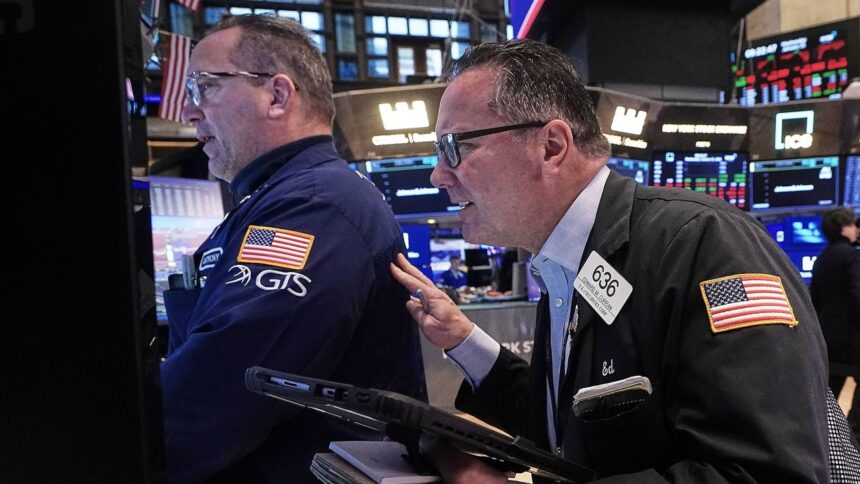
The U.S. stock market made a notable recovery on Wednesday, rebounding from a significant downturn experienced the previous day, attributed to a combination of factors including President Donald Trump’s comments regarding Greenland and the suspension of tariffs on several European nations.
Investors reacted positively to the news that Trump indicated a framework for a deal concerning Greenland, an area he has shown interest in acquiring. He also reassured international leaders that he would refrain from imposing tariffs on countries like Denmark, Norway, Sweden, and others, which had previously caused concern among market participants.
The S&P 500 surged by 1.2%, echoing this revival in sentiment, alongside substantial gains in both the Dow Jones Industrial Average, which rose by 588 points, and the Nasdaq composite, also up by 1.2%. This rally helped the S&P 500 recover more than half of the losses it incurred the day before when it faced a 2.1% drop.
In the bond market, Treasury yields eased, a sign that investor anxiety had softened significantly. The yield on the 10-year Treasury note dropped to 4.25% from 4.30% late Tuesday, marking a return to levels seen earlier in the week. Further calming of global yields, particularly from Japan’s bond market, also contributed to this easing of tensions.
The U.S. dollar managed to regain some of its value against other currencies after experiencing declines earlier, suggesting a stabilization of market conditions. Trump’s acknowledgment that the turmoil surrounding his Greenland aspirations negatively impacted the stock market further underscored the volatility often associated with his policy announcements.
Highlighting the day’s bullish performance were several major corporations. Halliburton, an oil field services company, surged 4.1% after delivering stronger-than-anticipated quarterly profits. Similarly, United Airlines saw a 2.2% increase following a positive earnings report, with CEO Scott Kirby noting the airline’s continued strong revenue momentum.
Conversely, Netflix experienced a 2.2% dip despite posting better-than-expected profits, as investor concerns shifted towards the company’s slowing subscriber growth and an uninspiring profit forecast for the upcoming quarter. Meanwhile, Kraft Heinz’s stock fell by 5.7% after Warren Buffett’s Berkshire Hathaway hinted at the possibility of divesting its significant stake in the company, following a previous write-down.
Overall, the S&P 500 closed at 6,875.62, up by 78.76 points, while the Dow ended the day at 49,077.23 and the Nasdaq climbed to 23,224.82, reflecting a broader recovery in market sentiment.
In international markets, trading was more subdued. European and Asian indices displayed mixed results with Japan’s Nikkei 225 contracting by 0.4%. The announcement of a snap election by Japan’s Prime Minister, Sanae Takaichi, raised concerns over potential increases in government debt, influencing global financial markets. The yield on Japan’s 40-year government bond, which had soared earlier in the week, moderated to 4.05%, illustrating the cautious mood among investors.
The fluctuating dynamics of the stock market drive ongoing discussions about the influence of political decisions on financial health, particularly as global economic interdependencies continue to evolve.