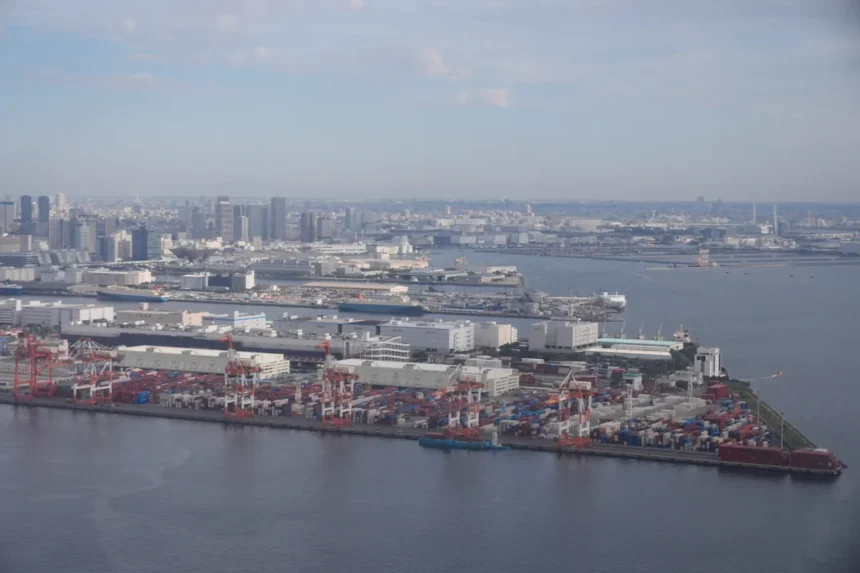
Japan’s economy faced a significant challenge in 2025, marking its fifth consecutive year of trade deficits, according to preliminary data released by the Finance Ministry. The total trade deficit for the year reached 2.65 trillion yen, or approximately $17 billion. This figure represents a notable reduction of nearly 53% compared to the previous year.
In terms of exports, Japan experienced a modest increase of 3.1% year-on-year, despite the pressures from U.S. tariffs and tensions with China. Conversely, imports saw a slight rise of less than 1%. December 2025 brought a temporary reprieve, as the country recorded a trade surplus of 105.7 billion yen, equivalent to $669 million. However, this monthly surplus was 12% smaller than the figure for December of the previous year, with imports climbing by 5.3% and exports rising by a more subdued 5.1%.
A closer look at trade relations reveals that exports to the United States deteriorated, declining by 11% in December. However, there was some positive movement, as exports to Britain, Africa, and several Asian nations experienced growth. Imports from Europe showed robust performance.
The United States has played a pivotal role in shaping Japan’s trade landscape, having implemented a 15% tariff on most imports from Japan. While this was a reduction from the previous 25% tariff proposed by President Trump, it still marked an increase from pre-Trump levels.
Further complicating the situation is China’s recent imposition of export controls on rare earth elements, which are vital to Japan’s manufacturing sector, particularly for automakers. These restrictions followed Prime Minister Sanae Takaichi’s comments suggesting that certain actions by China regarding Taiwan could lead to a Japanese military response.
Amidst these economic challenges, Takaichi is looking to consolidate political power through a snap election next month, hoping to leverage her current popularity to strengthen her party’s position in Parliament.
Despite the ongoing trade deficits and public dissatisfaction regarding rising prices and stagnant wages, Japan’s economy has shown resilience. The benchmark Nikkei index on the Tokyo Stock Exchange continues to reach new heights, signaling ongoing investor confidence despite the prevailing economic uncertainties.