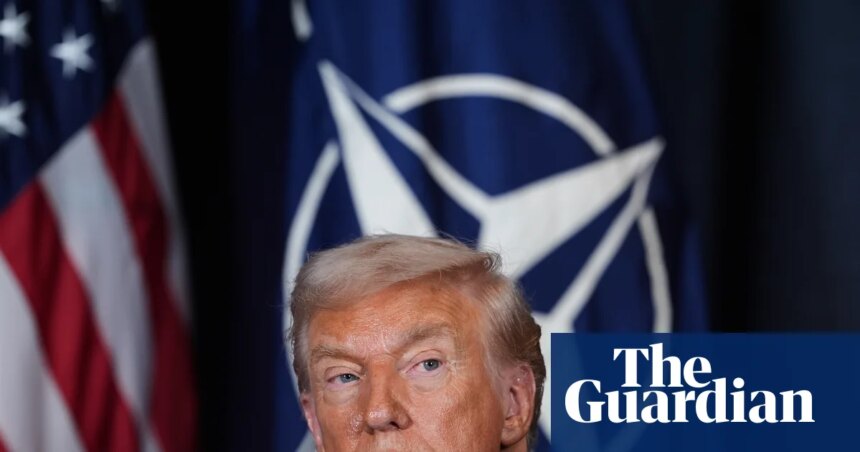
European stock markets experienced a notable uptick on Thursday, buoyed by Donald Trump’s announcement to cancel plans for new tariffs on eight European nations. This shift in sentiment has been interpreted by analysts as a resurgence of the “Trump Always Chickens Out” (Taco) trade, reflecting a market relief in response to the easing of trade tensions.
The FTSE 100 index rose by 0.8%, hitting a mark of 10,225 points. Concurrently, Germany’s DAX and France’s CAC witnessed gains of 1.4%. The broader pan-European Stoxx 600 index also climbed by 1.4%. In anticipation of these favorable conditions, Wall Street is projected to open on a positive note later in the day.
This uptick marked the first rise for European equity markets this week, following Trump’s earlier threat to impose tariffs on Germany, France, the UK, Denmark, Sweden, the Netherlands, Norway, and Finland. These tariffs were slated to take effect on February 1, contingent upon the U.S. negotiating the acquisition of Greenland. The president retracted threats of military force regarding this acquisition during a speech at the World Economic Forum in Davos, Switzerland. Shortly thereafter, he announced via his social media platform that the tariffs would not be enacted, citing an unspecified agreement with NATO Secretary General Mark Rutte.
Richard Hunter, head of markets at Interactive Investor, highlighted the resurgence of the Taco trade following these developments. Despite a tumultuous start to the week for global stock markets, U.S. share prices bounced back on Wednesday afternoon in New York.
Neil Wilson, a strategist from Saxo, weighed in, stating, “From the market point of view, it’s the classic Taco trade. The pivot has left markets buoyant as the very real threat of a trade war has receded.” Jim Reid, head of macro and thematic research at Deutsche Bank, referred to the market movements as a “big relief rally,” as investors recalibrated their outlook, reducing fears of escalating trade conflicts and alleviating financial stress across multiple asset classes.
However, Reid noted that both the S&P 500 and the U.S. dollar were still not performing at their levels from the previous Friday. The morning session saw the U.S. dollar holding steady against the euro and the pound, with one euro exchanging for $1.1689 and a pound for $1.3427.
In the precious metals market, gold remained a safe haven for investors amidst the ongoing uncertainty surrounding U.S. assets, maintaining spot prices around $4,833 a troy ounce, near record highs.
Lee Hardman, a senior currency analyst at MUFG, remarked that the market has expressed initial relief over the absence of immediate military threats or tariffs, although there is caution about their potential resurgence if negotiations do not progress favorably for Trump in the coming weeks and months. He noted that avoiding a tit-for-tat trade war is a positive sign for the global growth outlook and supports expectations for stronger economic performance in 2023.