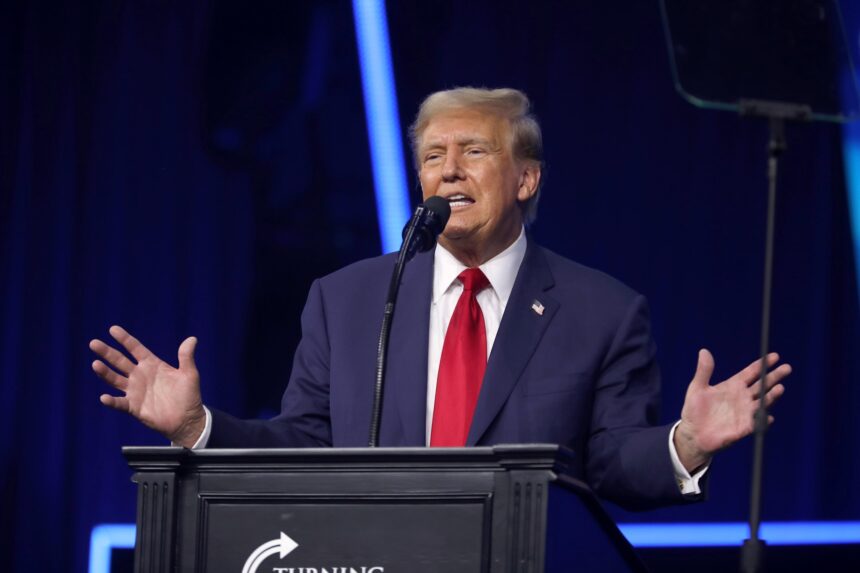
In a spirited address at the World Economic Forum in Davos, Switzerland, President Donald Trump proclaimed that the United States has firmly established itself as the “crypto capital of the world,” thanks to recent legislative actions aimed at energizing the digital asset sector. His statements emphasized the importance of political and competitive motivations behind the country’s push into the cryptocurrency domain.
Trump highlighted the passage of what he termed the “landmark GENIUS Act,” which he enacted last year, focusing specifically on stablecoins. The President noted that these steps were not merely economic strategies but were also influenced by political dynamics and the urgent need to compete with China in this emerging market.
As part of ongoing efforts to refine and expand the regulatory framework for cryptocurrencies, Trump shared that Congress is currently crafting a broader market structure bill that is expected to be signed into law “very soon.” This bill is being developed within the Senate through two different committees, with one committee poised to unveil draft legislation imminently. Meanwhile, another committee had previously delayed a vote as it continues to refine its contributions to the legislative package.
Trump followed up his declaration by underlining the political advantages of establishing a robust cryptocurrency framework in the U.S. He stated, “Number one, I thought it was politically good, and it was. I got tremendous political support.” His remarks were substantiated by the significant backing that bitcoin and cryptocurrency firms have provided to political action committees, reportedly amounting to hundreds of millions of dollars.
In addressing the geopolitical landscape, Trump stated that competition with China was a pivotal factor in the U.S. embracing the digital asset space. He argued that securing a stronghold in the cryptocurrency market is vital to ensuring that “China doesn’t get a hold of it.” The President’s comments reflect a broader strategic concern, reinforcing the notion that the race for dominance in the digital economy is not just a technological challenge but a critical element of national security and economic leadership on the global stage.