As the housing market shows signs of improvement, RH may be positioning itself for a dramatic stock turnaround. Previously known as Restoration Hardware, the company has weathered significant challenges over the past few years, particularly as the home improvement and furnishings sector faced pressures from rising mortgage rates and inflation in the post-pandemic landscape. During the pandemic, RH experienced notable growth, but subsequent economic shifts have led to a substantial stock decline—currently down 69% from its peak in 2021.
The aftermath of tariffs imposed during the Trump administration has further complicated matters for RH, compelling the company to transition nearly all of its production away from China. The stock had a momentary rally in late 2024; however, the enthusiasm was short-lived as the impacts of tariffs took hold.
Despite these hurdles, analysts suggest that RH might be an unexpected candidate for significant gains in the coming years. Remarkably, it has still managed to achieve over 600% growth since its initial public offering (IPO) in 2012, previously peaking at a staggering 2,000% increase. These numbers emphasize RH’s potential for substantial returns, especially if it manages to capitalize on a recovering housing market.
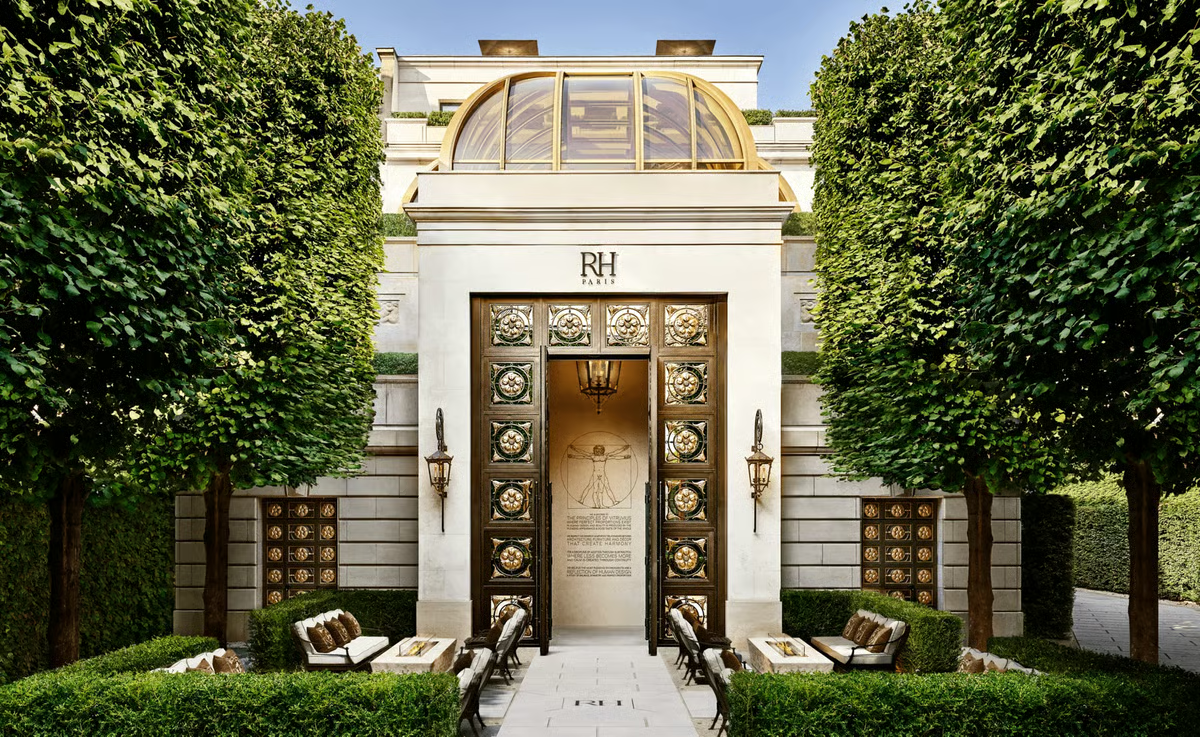
In a challenging economic environment where growth in the home furnishings sector has stagnated, RH reported a 9% revenue increase to $884 million in its most recent quarter. Its adjusted operating margin stood at 11.6%, showcasing resilience even amid what the company described as the worst housing market in almost five decades. The company’s diverse expansion strategies, including entering the European market with new galleries in cities such as Paris, London, and Milan, along with a foray into luxury sectors such as hotels and restaurants, illustrate its commitment to broadening its market reach.
As mortgage rates begin to ease, the potential for revenue growth exceeding 20% is plausible. With sufficient macroeconomic improvement, the company’s profit margins could also see a favorable increase.
CEO Gary Friedman, often viewed as an unconventional leader, has navigated RH through various transformations, including a strategic shift to a membership model in 2016. Initially met with skepticism and resulting in a stock decline, this approach ultimately created a loyal customer base and drove sales back up, showcasing Friedman’s acumen in steering the company through adversity.
Friedman and his management team have also effectively utilized share buybacks, a move that several publicly traded companies struggle with. In 2017, RH repurchased about 50% of its outstanding shares while trading at a discount. Recently, it bought back approximately a quarter of its shares as the stock faced post-pandemic challenges, setting the stage for a potential recovery in earnings per share.
Currently, RH has a market capitalization of $4.3 billion, which implies that for the stock to achieve a tenfold increase, it would need to grow to around $43 billion—though share buybacks could facilitate a quicker ascent. Despite facing a premium price-to-earnings ratio, a leap to $1 billion in net income from less than $4 billion in annual revenue is theoretically achievable, particularly with its high-margin luxury business model. The company’s profit margins have historically been strong, approaching 20%, and could rebound with a stable housing market.
While the journey to significant growth may be gradual, RH remains a stock to watch over the next five to ten years. The possibility of doubling revenue and restoring profit margins to the high teens suggests that substantial returns could be on the horizon if conditions align favorably.