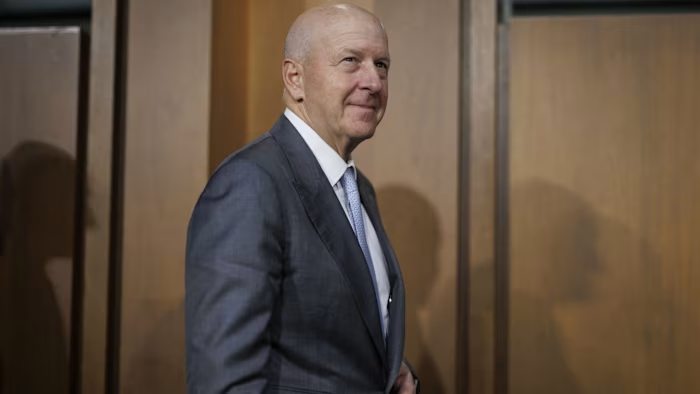
In a recent disclosure, Goldman Sachs revealed that CEO David Solomon received a staggering $47 million in compensation for the previous year, marking a striking 21 percent increase from the prior year. This figure represents Solomon’s highest earnings since he assumed leadership of the Wall Street titan in 2018.
The breakdown of Solomon’s compensation is notable, comprising a $2 million base salary, a $10.1 million cash bonus, $31.5 million in stock options, and $3.4 million in carried interest related to the funds managed by the bank. The added component of carried interest to Solomon’s pay was introduced only last year, highlighting a shift in compensation strategy at Goldman.
The increase in Solomon’s remuneration aligns closely with the bank’s financial performance, which saw profits rise by approximately 20 percent in 2025. However, it outpaces the overall 13 percent increase in pay and benefits expenditures across the firm during the same period. Goldman’s compensation committee noted that several factors were taken into consideration when determining Solomon’s pay, including the firm’s absolute financial performance, his standing relative to competitors, and the broader operating environment.
In comparison, Jamie Dimon, the CEO of JPMorgan Chase, earned $43 million last year, a figure disclosed only recently. Both CEOs had received $39 million each in 2024. Solomon’s higher compensation reflects his resilience in navigating criticism about his strategic decisions regarding Goldman’s consumer business, which faced challenges in the preceding years.
The significant portion of Solomon’s earnings derived from carried interest mirrors trends seen in large asset management firms, indicating that Goldman Sachs is looking to align its compensation framework with those firms to retain top talent. The shift in investment strategies and the restructuring of compensation could be a response to a competitive market for senior leadership within the finance sector.
Goldman Sachs’ stock performance also played a role in this remuneration structure, with shares increasing by over 50 percent in 2025, aided by favorable deregulatory measures introduced during the Trump administration and a revitalized outlook for investment banking. This upward trajectory underscores the bank’s recovery and strategic recalibrations following periods of intense scrutiny.