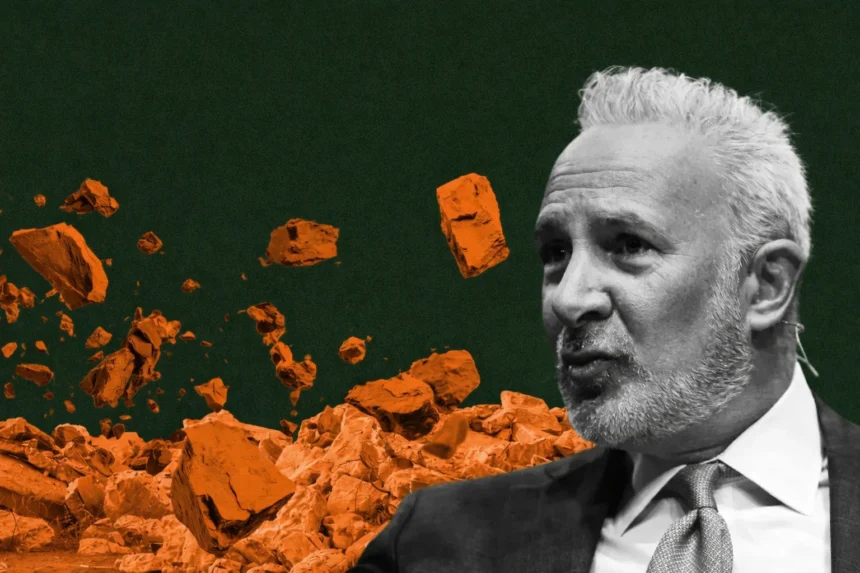
Economist Peter Schiff has raised alarms over the weakening state of the U.S. economy, as prices for gold and silver have soared to record peaks over the weekend. This surge has reignited discussions about the potential decline in confidence in the U.S. dollar, traditionally regarded as the cornerstone of global trade. While many analysts maintain that the dollar still holds a strong position, the increasing power of the BRICS bloc and heightened demand for precious metals are stoking fears of de-dollarization.
Schiff has characterized the recent uptick in precious metal prices as an indicator of the underlying frailty of both the U.S. dollar and the economy. He asserted, “Trump may think the U.S. has the hottest economy in the world, but financial markets prove it’s the coldest.” During his commentary, he noted notable increases in prices, claiming gold is now above $5,020, silver has reached over $104.65, and the dollar has hit a record low against the Swiss franc.
Moreover, Schiff cautioned that U.S. dollar-denominated assets and cryptocurrencies could face severe devaluations in the near future. He predicted that by year-end, investors in dollar-based assets and cryptocurrencies, including Bitcoin, would find themselves significantly poorer than they are today. Meanwhile, he claimed that those holding non-dollar-denominated assets and precious metals would fare much better.
Market commentators have interpreted the surge in precious metals as a signal of broader disillusionment with fiat currencies. A social media account named NoLimit suggested that the concurrent rise in gold and silver prices indicates markets may be “pricing in a collapse of trust in the U.S. dollar.” They claimed, “People aren’t buying metals because they want to — they’re buying because they’re terrified of holding anything else.”
While gold and silver prices have seen remarkable increases, analysts warn of potential volatility. Notably, Roukaya Ibrahim from BCA Research has advised caution for investors chasing after current prices, as silver’s deviation from its 200-day moving average suggests it could be poised for a pullback. Additionally, she mentioned that rising prices are driving shifts in industrial demand, particularly in sectors reliant on silver, such as solar manufacturing.
The discussions surrounding the dollar’s stability are further complicated by the strategic efforts of the BRICS coalition—comprising Brazil, Russia, India, China, South Africa, and other newer members like Egypt, Iran, and the UAE. These nations are actively seeking to reduce reliance on the U.S. dollar by exploring local currency settlements for trade and developing a gold-backed digital currency for cross-border transactions. Supporters of this initiative argue that it could streamline trade and mitigate exposure to dollar volatility.
Mamadou Kwidjim Toure, founder and CEO of Ubuntu Tribe, noted that while the dollar is still predominant, its share of global foreign exchange reserves has markedly declined from around 70% in 2000 to 56.92% by late 2025, as per IMF figures. Toure stated that central banks acquired over 1,100 tons of gold in 2025 alone, marking the highest annual increase in 70 years. He cautioned that while de-dollarization won’t occur instantaneously, it indicates a gradual yet significant shift in global trade and reserves that many may overlook.
In addition to these warnings, Schiff anticipates a financial crisis in 2026 that he believes will eclipse the global financial crisis of 2008, albeit with differing geographical consequences. He asserts that while this future crisis will hit the U.S. hard, the rest of the world might benefit as the burden of sustaining the U.S. consumer economy diminishes. His forecasts suggest that Bitcoin investors, particularly those who hoped to use the cryptocurrency as a hedge against inflation, may find themselves facing greater losses compared to those who invested in traditional precious metals like gold and silver during this economic downturn.