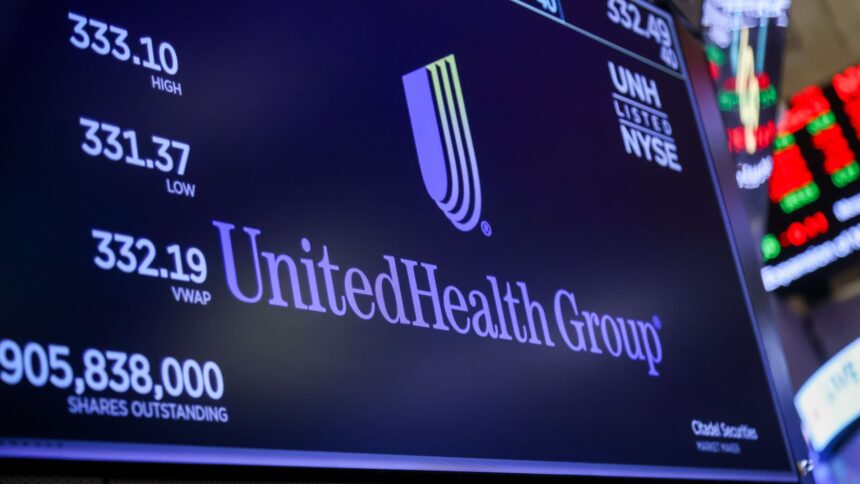
UnitedHealth Group Inc. reported fourth-quarter earnings that slightly exceeded analysts’ expectations, but the company faced challenges as it issued conservative revenue guidance for the upcoming year. For the fourth quarter, UnitedHealth posted an adjusted earnings per share of $2.11, marginally surpassing the expected $2.10. In contrast, its revenue of $113.2 billion fell short of the anticipated $113.82 billion.
The financial disclosures coincide with heightened scrutiny around the company, as CEO Stephen Hemsley and other Minnesota business leaders recently penned an open letter urging for a de-escalation of tensions following a tragic incident where a U.S. citizen was shot by federal immigration agents.
Facing increased medical costs, UnitedHealth is counting on a new leadership team to spearhead a turnaround strategy. This plan includes a reduction in membership, adjustments in pricing, benefit cuts, and an emphasis on operational transparency to regain both profitability and trust after experiencing a range of setbacks over the past two years.
Looking forward to 2026, UnitedHealth anticipates revenue will reach $439 billion, marking a 2% year-over-year decrease and falling well below analysts’ forecasts of $454.6 billion. Chief Financial Officer Wayne DeVeydt noted this decline is a historic first for the company in a decade. He identified three main factors influencing this outlook: the company’s recent divestitures, a significant drop in U.S. membership—over 3 million expected to be lost in 2026—and the impacts of a new Medicare coding system (V28) that alters payment structures and is projected to result in a $6 billion revenue hit.
DeVeydt elaborated on the expected revenue decline, emphasizing a strategic shift toward focusing on domestic operations while divesting from international markets like the U.K. and South America. The transition aims to fortify the balance sheet and reposition UnitedHealth for renewed growth.
The company’s recent performance and projections come amidst a broader industry context, where health insurers, including UnitedHealth, saw their stocks plummet following proposed flat payment rates for Medicare Advantage, a vital sector covering a substantial portion of Medicare beneficiaries. This payment rate significantly affects insurers’ premium charges and benefits, ultimately influencing their profitability.
Medical costs associated with Medicare Advantage enrollees have surged over the past two years, driven by a wave of older adults returning for postponed healthcare procedures that were deferred during the pandemic. However, DeVeydt noted that while fourth-quarter medical costs remained high, they did not exceed company projections.
As UnitedHealth navigates fiscal complexities, the insurance segment’s medical benefit ratio for 2026 is expected to be around 88.8%, indicating a potential improvement from the previous year’s 89.1%. A lower medical benefit ratio generally signifies that the company is managing to collect more in premiums than it disperses in benefits, which could lead to enhanced profitability in the long term.