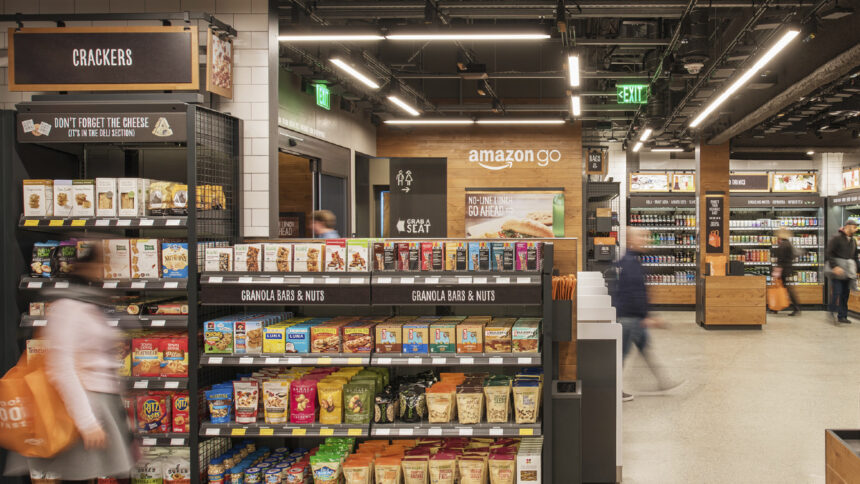
Amazon has announced significant changes to its physical retail strategy, revealing plans to close its Amazon Go and Amazon Fresh stores in favor of expanding its grocery delivery services and enhancing the presence of Whole Foods Market. This decision marks a notable shift as the company aims to focus on refining its business model amidst challenges in its brick-and-mortar operations.
In a blog post, Amazon indicated that while there had been encouraging developments in its physical grocery stores, the company struggled to create a compelling customer experience paired with a sustainable economic model necessary for large-scale expansion. The Just Walk Out technology, designed to streamline the checkout process by allowing customers to grab items and leave without conventional checkouts, will now be offered to third parties, including venues like sports stadiums.
The closure of these stores will not affect customers relying on Amazon for grocery delivery, as the company continues to pivot towards online services. An Amazon spokesperson indicated that the decision to shutter certain locations in 2024 was driven by challenges in making the lease costs economically viable.
Despite moving away from its Amazon-branded retail spaces, the company is not abandoning the physical retail sector entirely. Instead, Amazon is embracing the stronger brand identity associated with Whole Foods Market. The company plans to open over 100 new Whole Foods locations in the coming years, backed by impressive growth since its acquisition in 2017, which has seen a 40% increase in sales and the expansion to 550 stores.
Additionally, Amazon is set to introduce Whole Foods Market Daily Shop locations, which will focus on convenience and quick meals, reflecting a model similar to that of the now-closing Amazon Go and Amazon Fresh stores. However, consumer perception may favor grabbing convenient meals from Whole Foods rather than Amazon’s grocery services, underscoring a branding advantage for the organic grocery chain.
Overall, the move illustrates Amazon’s strategic redirection towards leveraging its strengths in the grocery sector while responding to the evolving landscape of consumer preferences and market dynamics.