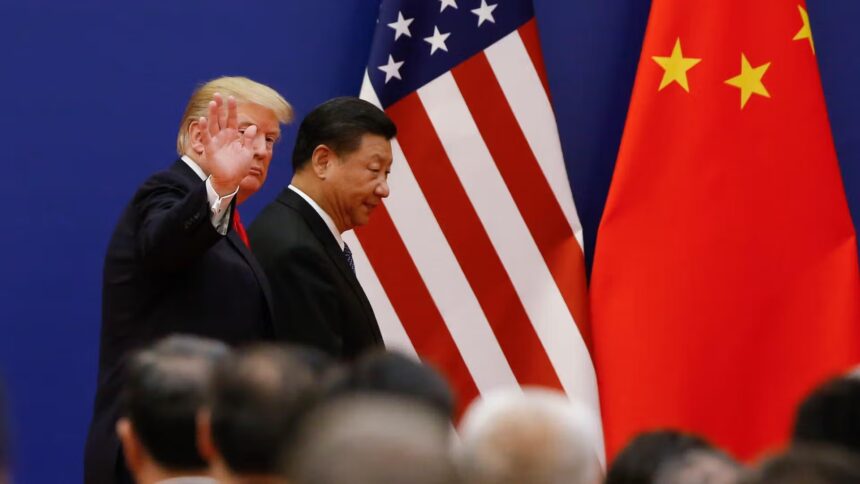
China’s economic landscape is undergoing significant changes in response to President Trump’s aggressive trade policies, which have imposed steep tariffs on nearly all imports from the world’s second-largest economy. The average U.S. tariff on Chinese goods has soared to approximately 29.3% as of January 2026. This shift in trade dynamics is not only reshaping traditional economic models but is also sending ripples through global cash flows, including the cryptocurrency markets.
The Chinese government has strategically responded to these tariffs by maintaining tight control over the yuan’s exchange rate. This control is pivotal for China, allowing it to preserve its export competitiveness and manage deflationary pressures effectively. A recent analysis by JPMorgan highlights that China’s approach to exchange rate management amplifies flows of dollar liquidity during periods of heightened trade tension. This dynamic acts like a storm, exacerbating financial conditions and influencing asset classes, including Bitcoin, which is particularly sensitive to macroeconomic changes.
Bitcoin’s fluctuations demonstrate its connection to the broader economic landscape. During times of trade uncertainty, when dollar liquidity tightens due to tariff-related risks, Bitcoin tends to fall in value. Conversely, when trade tensions ease, the cryptocurrency rebounds. This pattern was notably observed from March to April of the previous year, coinciding with escalating trade frictions.
China’s impact on the cryptocurrency market is indirect, primarily filtering through its currency management and overall global liquidity conditions. This contrasts with the United States, where capital flows more directly affect market dynamics through investment vehicles like exchange-traded funds. Arthur Hayes, a notable figure in the crypto space, has underscored that U.S.-China trade negotiations often appear performative, with real economic adjustments transpiring through subtler channels.
JPMorgan’s findings support Hayes’ interpretation, suggesting that while China might refrain from allowing a significant appreciation of the yuan, the interplay between tariffs, managed exchange rates, and dollar liquidity is crucial for understanding the macroeconomic backdrop for Bitcoin trading.
Despite the challenges posed by U.S. tariffs, China’s export sector demonstrates notable resilience. Projections indicate that real exports are expected to grow by approximately 8% in 2025, with China’s share of the global market increasing to around 15%. This resilience is attributed to diversification strategies toward ASEAN and other markets, coupled with a deliberate approach to managing the yuan’s value.
While the yuan has seen a strength of about 4% over the past year from its lows, its overall trajectory remains tightly controlled. The slight appreciation of the currency is viewed as seasonal, with forecasts suggesting that it will continue to operate within a narrow range due to ongoing deflationary pressures and a strong focus on maintaining export competitiveness.
In summary, as China navigates through the complex landscape shaped by U.S. trade policies, its strategy of managing the yuan and responding to global liquidity cycles stands out. This approach not only enhances the nation’s export potential but also provides critical insights into the evolving dynamics of the cryptocurrency markets, illustrating how traditional economic policies continue to influence digital assets in significant ways.