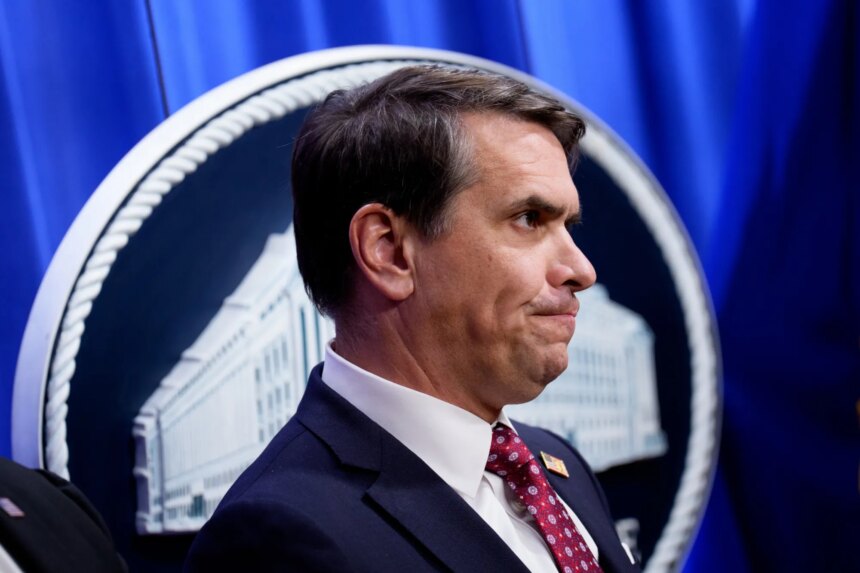
This week, a group of six senators has raised serious accusations against Deputy Attorney General Todd Blanche, suggesting that he has a direct conflict of interest linked to his recent decisions impacting cryptocurrency investigations. The senators contend that Blanche’s actions to conclude investigations into crypto companies and eliminate a dedicated enforcement team have compromised the integrity of the Department of Justice (DOJ).
In a letter penned by Democratic Senators Elizabeth Warren, Dick Durbin, Mazie Hirono, along with Sheldon Whitehouse, Christopher Coons, and Richard Blumenthal, the lawmakers referenced a ProPublica report uncovering that Blanche owned at least $159,000 in crypto assets at the time he ordered the cessation of these investigations. This revelation has intensified their concerns about his motivations, especially regarding the potential impact on former President Donald Trump’s financial interests in cryptocurrency.
Blanche, who is the second-highest official at the DOJ, had previously signed an ethics agreement promising to divest his cryptocurrency holdings within 90 days of his confirmation. He assured that he would not engage in matters that could directly influence his financial interests until the sale of his assets was complete. Despite this commitment, on April 7, Blanche issued a memo entitled “Ending Regulation by Prosecution,” which effectively halted investigations initiated under the Biden Administration. He criticized the DOJ’s aggressive regulatory approach to cryptocurrencies as “reckless” and laid out a new focus on targeting only those who use crypto for illegal activities like drug trafficking and terrorism.
The senators expressed their alarm soon after the issuance of the memo, arguing that Blanche’s decision could facilitate various criminal activities, including sanctions evasion and human trafficking. Following recent reports indicating a significant uptick in illicit crypto activities, the justice officials have reiterated their concerns. They noted that crimes related to money laundering and other infractions surged in 2025, seemingly validating their warnings regarding Blanche’s policy shift.
The senators’ latest correspondence has pressed for clarity over the approval process behind Blanche’s actions, demanding answers about how and when his decisions were cleared and by whom. They have requested any written determinations regarding the legality of his enforcement actions and documentation of communications with both ethics officials and the cryptocurrency industry prior to his April memo.
This scrutiny comes on the heels of a formal complaint submitted by the Campaign Legal Center, a nonpartisan watchdog group, calling for an investigation into Blanche’s decisions. The group’s general counsel, Kedric Payne, asserted that Blanche’s directives benefited not just the industry but also his personal investments. Estimates reveal that the value of Blanche’s cryptocurrency holdings increased significantly—by 34%—from the memo’s issuance to the divestiture of his assets.
Under federal regulations, government employees are barred from partaking in matters that could financially benefit them unless a waiver is granted. Violations can lead to severe penalties, including imprisonment and substantial fines. Payne has emphasized the public’s right to expect that governmental decisions are made in the public interest, rather than to enhance an official’s personal financial situation.
Adding a layer of complexity, Blanche has previously served as Trump’s lead attorney in a high-profile trial linked to numerous felony convictions relating to hush-money payments. His history of defending Trump raises further questions about the intricate ties between Blanche’s professional decisions and his personal financial interests within the realm of cryptocurrencies.
The unfolding situation surrounding Deputy Attorney General Todd Blanche highlights concerns about transparency, accountability, and the potential for conflicts of interest within the Justice Department as it navigates the evolving landscape of cryptocurrency regulation.