The cryptocurrency market is exhibiting a cautious consolidation period as Bitcoin stabilizes around $88,125 and Ethereum hovers near a pivotal point of $2,999. Amidst this landscape, institutional interest has surged, particularly highlighted by discussions at the World Economic Forum in Davos, where Hedera is advocating for public distributed ledgers as viable financial infrastructure. Meanwhile, TRON faces technical resistance at $0.29, prompting discussions about its short-term trading dynamics versus the long-term structural appeal of assets like Hedera and Zero Knowledge Proof (ZKP).
Hedera’s presence at Davos signifies its commitment to discussions on tokenization and financial innovations that integrate AI. Executives from the platform have engaged with a range of stakeholders, including government representatives, central banks, and leading corporations, underscoring the significance of trust frameworks for non-stablecoin tokenized assets like real estate and intellectual property. The governance model of Hedera, which operates through a council-based structure, has gained traction as a balanced approach between centralization and decentralization. Regulatory talks have positioned Hedera as a potential reference for future governance frameworks in the U.S. and EU, reinforcing its long-term vision in the cryptocurrency space.
In contrast, the TRON stablecoin is trading close to $0.295 with notable volume, yet it faces headwinds from technical indicators indicating a potentially overbought scenario. The relative strength index (RSI) suggests a possible pullback, and the Bollinger Bands indicate consolidation between $0.27 and $0.30. Traders appear divided on the token’s trajectory—while a breakout above resistance could lead to a target of $0.31, failure to maintain the $0.29 support level could trigger downward movements. Unlike Hedera’s focus on foundational integrations, TRON’s current strategy skews towards short-term speculative opportunities, appealing primarily to traders seeking volatility rather than inherent protocol value.
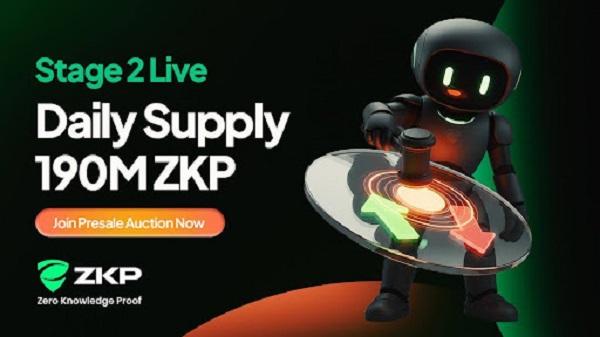
Zero Knowledge Proof (ZKP) is making waves for its innovative approach to liquidity management and behavioral strategy. The project has attracted considerable interest, raising over $1.7 million in its presale phase, with a structured offering of 190 million tokens per day and a mechanism to permanently burn any unpurchased tokens. This strategy creates an artificial supply constraint while incentivizing discipline among buyers through a rewards system that compounds over time. Buyers who purchase ZKP daily benefit from increasing bonuses, enhancing their share of the available tokens and safeguarding against dilution as supply tightens.
Analysts highlight ZKP’s ambitious target of a $1.7 billion liquidity raise, positioning the token for institutional quality and protecting it from post-launch volatility. The potential for a 5,000x return on investment stems from a well-planned capital structure rather than speculative hype. By anchoring the token at a robust financial scale, the project seeks to offer a safe entry for long-term investments.
As the cryptocurrency landscape evolves in 2026, Hedera emerges as a significant player in policy and governance, TRON caters to the speculative appetites of traders, and ZKP is engineering a supportive framework for potential investors. The landscape offers varied opportunities depending on individual risk appetites and investment horizons. As investors assess their choices, ZKP’s unique integration of disciplined entry, market protection, and long-term positioning could surface as a standout contender in the quest for the best crypto to buy.