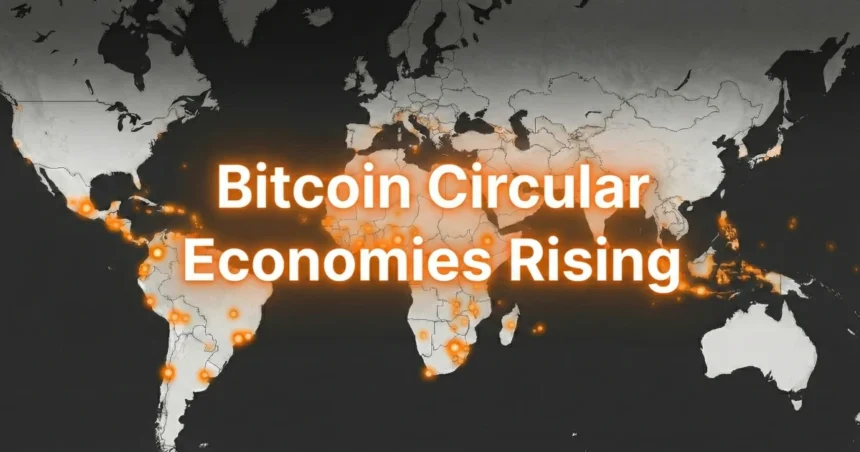
The recent Bitcoin Circular Economy Summit, held in the picturesque Bitcoin Beach in El Salvador, brought together a diverse group of advocates, leaders, and innovators for a two-day deep dive into the transformative potential of Bitcoin. This invite-only event saw approximately 60 participants and speakers from an alleged 29 different countries, ranging from Indonesia to Peru and across Africa to Bolivia, showcasing the global appeal of Bitcoin as a tool for economic empowerment.
Organized by the Bitcoin Beach initiative, led by Mike Peterson and Roman Martinez, the summit was held at the newly constructed community center in El Zonte, which aims to support the area’s growing population and economy. The agenda covered a wide array of topics, including Bitcoin Circular Economies (BCEs), strategies for adoption, financial sustainability, and educational initiatives for local leaders.
Participants shared inspiring stories of success from various regions, highlighting the impactful adoption of Bitcoin in countries grappling with economic instability. Attendees expressed deep gratitude towards Bitcoin donors and activists who have stepped in to provide support to remote communities, effectively bringing hope to areas often overlooked by traditional financial systems.
The conversation was anchored by insights from the Bitcoin Beach White Paper, which established El Zonte as a leader in the Bitcoin circular economy since 2019. Key themes discussed included the importance of focusing on concentrated adoption within specific communities rather than a scattered approach. This strategy, as put forth by BCE leaders, encourages deeper engagement, drives local tourism, and ultimately increases the volume of Bitcoin transactions, fostering sustainable interest in the cryptocurrency.
Moreover, the summit emphasized the need for a high-trust team composition. Peterson cautioned against rushing into partnerships, advocating instead for carefully chosen collaborators committed to the same values. Participants stressed the importance of maintaining Bitcoin as the central currency used in these initiatives, rather than diversifying into other cryptocurrencies, to avoid the pitfalls of well-documented scams.
Key discussions also revolved around sustainability—the ability for local BCEs to thrive without ongoing donations. While some communities may always rely on financial aid, sharing successful models of inter-community economic cooperation illustrated pathways to greater independence and resilience. An example cited was the Motive initiative in Peru, which showcases the exchange of goods between indigenous craftspeople and Bitcoin-friendly tourist hubs.
The summit underscored the necessity for leaders to focus on education and empowerment as pillars of their efforts. Instead of merely distributing aid, the aim is to uplift local communities through skill-building initiatives, thereby fostering long-term sustainability.
Funding mechanisms also took center stage, as multiple organizations, including the American B2B payments company Paystand, were highlighted for their role in supporting BCEs. They provide grants and mentorship without expecting advertising or financial return, viewing their contributions as part of their broader mission within the Bitcoin community.
Technological advancements are also crucial to the sustenance of BCEs, with several custom-built tools unveiled during the summit. Popular wallets like Blink, which integrates Bitcoin Lightning capabilities, along with applications such as Fedi, aim to enhance user experience in low-tech environments.
AmityAge, a Bitcoin financial services provider, facilitated discussions on overcoming common adoption barriers, while other sponsors showcased innovative platforms for fund-raising and task completion designed to empower local leaders and communities.
Reflecting on the overall experience, the summit distinguished itself from larger industry conferences, which often seek to establish Bitcoin’s position in traditional markets. Instead, this gathering reaffirmed that Bitcoin serves a purpose beyond financial speculation; it aims to bridge gaps for those marginalized by existing financial institutions. The focus remained clear: to utilize Bitcoin as a catalyst for real social change, fostering economic growth in environments that remain desperate for financial inclusivity and hope.