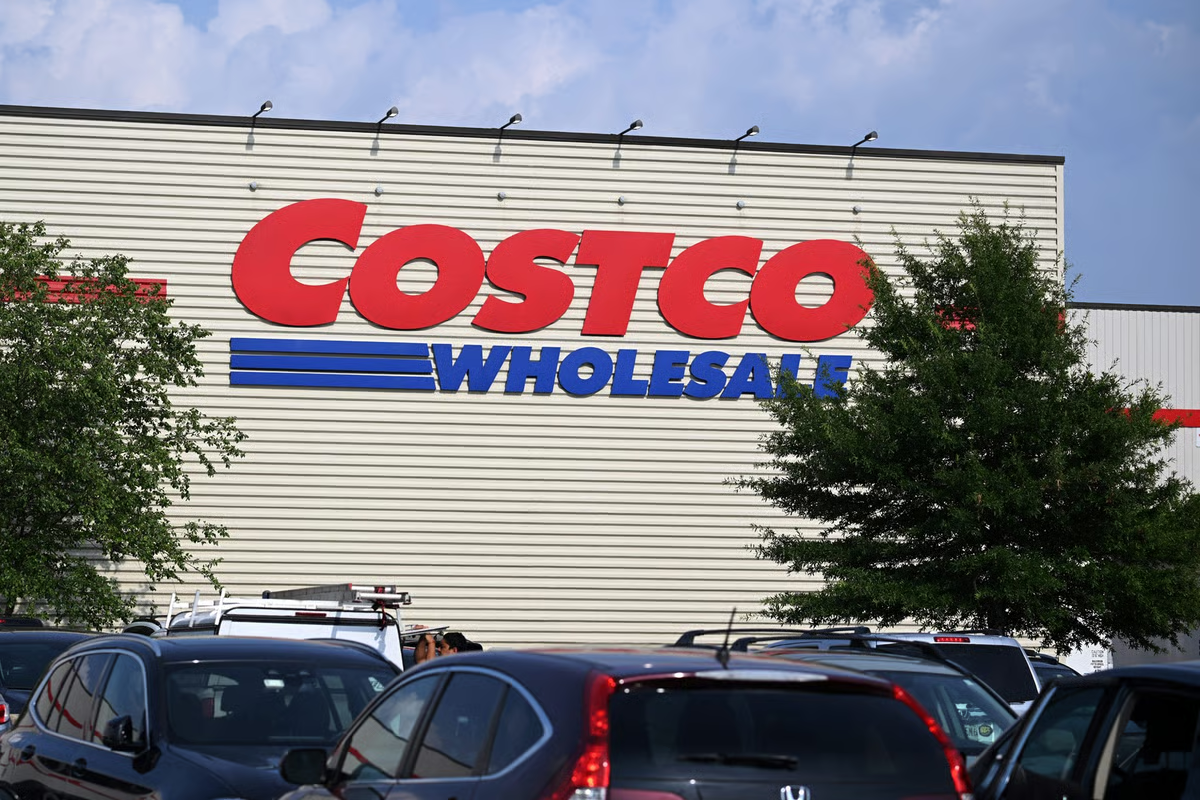
The retail giant Costco Wholesale has regained significant market attention, having launched into 2026 with a remarkable 13% increase in share price just in January. This resurgence follows a year where Costco’s stock saw little movement, a stark contrast to its historical performance of consistently outperforming the S&P 500.
Costco operates on a membership-based model that has proven effective in attracting customers seeking low prices. This model not only encourages high membership renewal rates but also typically translates into substantial growth and profitability for the company. In its 2026 fiscal first quarter, which ended on November 23, Costco reported an 8.2% year-over-year increase in sales, along with a 6.4% rise in comparable sales. Notably, its digitally enabled sales soared by 20.5%, and earnings per share climbed from $4.04 to $4.50.
In the U.S. and Canada, Costco’s membership renewal rate remained impressive at 92.2%, while the global renewal rate was recorded at 89.7%. The total number of paid memberships grew by 5.2% to reach 81.4 million. As consumer preferences evolve, Costco is upgrading its operations, implementing self-checkout options and facilitating online registrations and renewals. While a traditional e-commerce approach poses challenges due to the bulkiness and cost of items in its warehouses, the company has also enhanced its grocery delivery services through a partnership with Instacart, coupled with a growing curbside pickup offering.
Investors were particularly buoyed by the company’s December results, revealing an 8.5% increase in sales year-over-year, with comparable sales rising by 7%. However, despite its solid performance, Costco stock is also characterized by high valuations. Recently, the stock was trading at a price-to-earnings (P/E) ratio around 52, a decrease from the peak valuation above 60 observed the previous year, which had put it in high-growth-stock territory. While this drop may make it appear less attractive at first glance, the prospect of long-term investment in Costco could yield rewarding results for those willing to adopt strategies like dollar-cost averaging.
With a current market capitalization of $417 billion and a fluctuating share price, Costco continues to be a pivotal player in the retail landscape. The company’s consistent growth, coupled with its innovative approaches to membership and customer engagement, reflects a robust model that potentially positions it well for sustained success in the coming years.