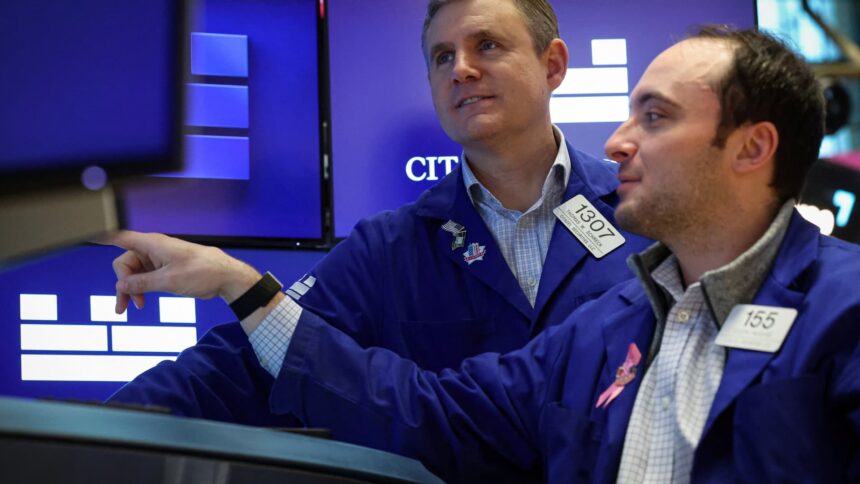
Traders on Wall Street were met with a rocky start to the month as stock futures took a hit on Sunday evening. Following a weekend marked by a sell-off in bitcoin, futures for the Dow Jones Industrial Average fell by 143 points, or 0.3%. The S&P 500 futures declined by 0.6%, and the Nasdaq-100 futures saw a more significant drop of nearly 1%.
Bitcoin suffered a notable decline, dipping below $80,000 for the first time since April. This drop signals a shift in investor sentiment as many opted to reduce their risk exposure following a tumultuous trading session on Friday that saw sharp declines in gold and silver. In a particularly dramatic fall, silver—having more than doubled over the past year—plummeted around 30% on Friday, marking its worst one-day performance in over four decades. Gold also faced challenges, slipping around 9%, with bitcoin last trading near $76,000.
Investors are also closely monitoring Nvidia amid growing concerns over its commitments in the artificial intelligence sector. Reports from The Wall Street Journal cited sources indicating that Nvidia’s plans to invest $100 billion into OpenAI have stalled, as executives from the chipmaker voiced skepticism regarding the feasibility of the agreement.
This week will see earnings reports from over 100 S&P 500 companies, including industry giants such as Amazon, Alphabet, and Disney. Although the reporting season has generally exceeded expectations, notable stocks have experienced substantial sell-offs post-earnings announcements, Microsoft being a key example. Nevertheless, Deutsche Bank strategists highlighted that earnings growth for this quarter is on track to reach its strongest levels in four years.
In addition to corporate earnings, Wall Street is bracing for the release of the January U.S. jobs report, set to be revealed on Friday morning. Economists surveyed by Dow Jones predict that approximately 55,000 jobs were added during the last month.
The backdrop for these market movements includes recent political developments, particularly the nomination of Kevin Warsh by President Donald Trump to potentially take over as Federal Reserve chairman later this year. If Warsh is confirmed, he would succeed Jerome Powell, adding another layer of uncertainty to market dynamics. As investors navigate these factors, volatility is expected to remain a significant element in the upcoming trading sessions.