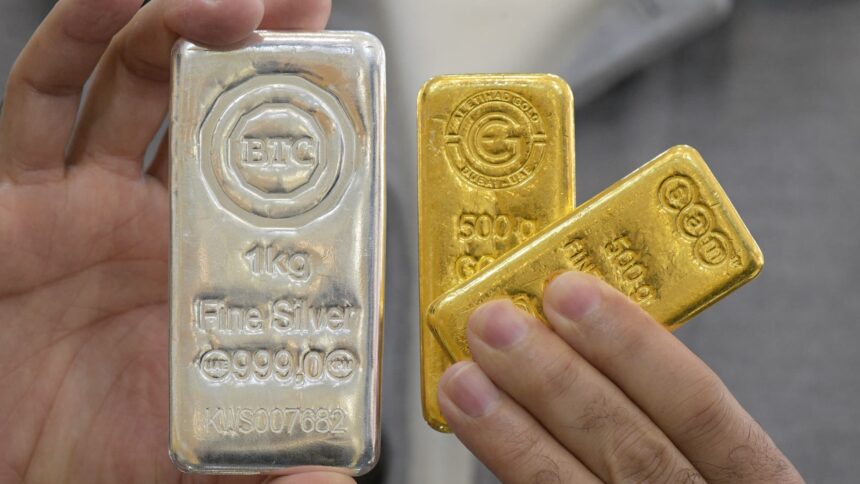
In a striking shift within the precious metals market, gold and silver experienced a significant sell-off, deepening losses from a tumultuous trading session last Friday. The sell-off prompted an alarming reaction from investors, shifting market dynamics and causing prices to fall steeply.
On Monday, spot gold plummeted approximately 5% to $4,611.40 per ounce, marking a steep decline after a nearly 10% crash that occurred last Friday when prices dipped below the critical threshold of $5,000 per ounce. This dramatic downturn is viewed as a correction to a recent rally that had propelled gold prices to record highs, just days prior.
Similarly, silver faced immense pressure, dropping more than 10% to $76.11 per ounce. This follows an extraordinary 30% drop last Friday, which represented the worst single-day performance for silver since March 1980. The surge in demand for both metals had initially driven their prices up, as investors sought refuge in safe-haven assets amid growing uncertainty.
Market analysts point to various factors contributing to this volatility, including a sudden reassessment of U.S. monetary policy. The lifting of optimism surrounding potential interest-rate cuts coincided with President Donald Trump’s nomination of former Federal Reserve Governor Kevin Warsh to succeed Jerome Powell. Warsh is known for advocating tighter monetary policy, which consequently bolstered the U.S. dollar.
José Torres, a senior economist at Interactive Brokers, indicated that the “Buy America” trade is resuming amidst this backdrop, dismantling the independence bid that recently buoyed gold and silver prices to staggering heights. Christopher Forbes, head of Asia and the Middle East at CMC Markets, described the downturn as a “classic correction” rather than indicative of a long-term bearish trend. He noted that the market is experiencing what could be termed an “air-pocket” pullback after an extraordinary upward run.
The dollar index, which reflects the strength of the U.S. dollar against a basket of currencies, has seen an increase of approximately 0.8% since last Thursday, making gold less appealing to international buyers. Higher interest rates elevate the opportunity cost associated with holding non-yielding assets like gold, as Treasurys become a more attractive safe haven.
As geopolitical concerns also began to ease—partly due to Trump’s comments suggesting a potential deal with Iran—crude oil prices fell sharply, further impacting the market sentiment surrounding gold and silver.
Looking ahead, analysts suggest that while gold prices may remain elevated, they will likely continue to exhibit volatility as the market seeks more clarity regarding Warsh’s potential policy direction. Despite recent setbacks, silver prices are still up about 16% since the beginning of the year, while gold sits approximately 8% higher year-to-date.
Forbes expressed a bullish outlook for the precious metals in the longer term, noting that renewed dollar weakness or any sign of a dovish stance from Warsh could attract dip buyers back into the market. This could potentially allow both metals to revisit their recent highs, especially if the Federal Reserve continues to ease policy amid uneven economic growth and inflation conditions.