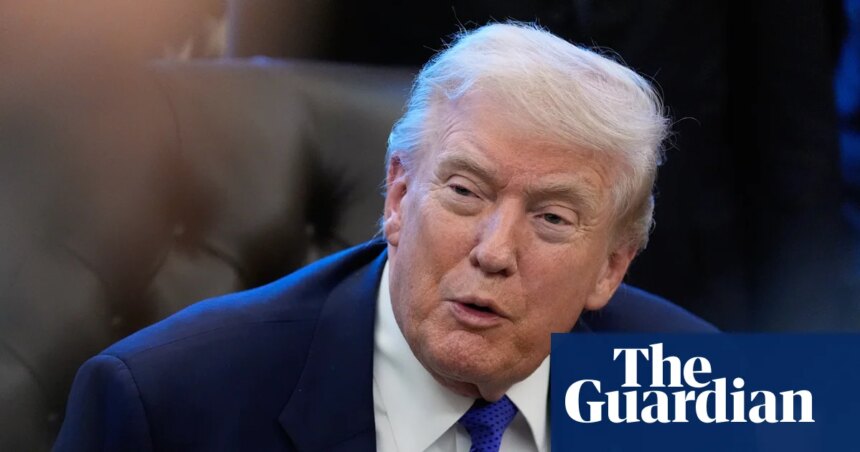
Donald Trump is facing serious allegations of corruption following revelations regarding a substantial $500 million investment in a cryptocurrency venture co-owned by his family, facilitated by a member of the Emirati royal family. This deal, struck just days before Trump’s inauguration in January, raises significant ethical questions and has sparked calls for a congressional investigation.
The investment was made by Sheikh Tahnoon bin Zayed Al Nahyan, who is not only a prominent figure in the UAE government but also serves as the national security advisor and chairman of the Emirates’ $1.5 trillion wealth fund. Critics argue that the timing and nature of this investment amount to a clear conflict of interest for the Trump administration. In the months that followed, the U.S. government approved a deal allowing the UAE to import 500,000 AI chips from Nvidia, despite concerns about potential security risks involving China.
Ethics observers have flagged this situation as a blatant violation of the Constitution’s Federal Emoluments Clause, which is designed to protect against corruption. Donald Sherman, president of Citizens for Responsibility and Ethics in Washington, emphasized that the deal is a disgraceful conflict of interest, suggesting it raises questions about whether Trump’s policies regarding the UAE prioritize American interests or those of a foreign entity.
Documents reviewed by the Wall Street Journal reveal that just four days prior to Trump’s inauguration, emissaries for Sheikh Tahnoon secured a 49% stake in World Liberty Financial, the cryptocurrency company partially owned by the Trump family. The arrangement reportedly involved an upfront payment of $500 million, with $187 million directed to Trump-related entities and $31 million to Steve Witkoff, a business associate of Trump’s and co-founder of World Liberty.
In response to these allegations, a White House official stated that Trump has distanced himself from running his businesses, having entrusted them to his children. They characterized claims of constitutional breaches as “bogus” and argued that mere appearances of business dealings do not constitute violations of the Emoluments Clause.
The controversy is exacerbated by the structure of Trump’s businesses. While previous presidents typically place their assets into a blind trust, Trump has entrusted control to his sons, Donald Trump Jr. and Eric Trump. Critics have pointed out that this approach creates ongoing risks for conflicts of interest.
Kedric Payne, general counsel at the Campaign Legal Center, described the situation as “beyond unprecedented,” highlighting that no modern president has faced such potential conflicts due to international business interests. Trump’s relationships with Emirati officials continued even after he assumed office, with reports indicating he hosted Sheikh Tahnoon at the White House and emphasized the strong ties between the two nations.
The recent investment from the UAE’s AI investment arm, MGX, into cryptocurrency exchange Binance, closely followed these events. Shortly after, the Trump administration announced its approval of the UAE’s import of Nvidia chips, which had previously faced restrictions by the Biden administration over similar security concerns.
While no direct evidence has emerged suggesting that the chip exports were offered in exchange for investment in Trump’s venture, legal experts have warned that significant conflicts of interest remain. Richard Briffault, a law professor, noted the ambiguity surrounding the motivations for policy decisions, highlighting that such situations can lead to confusion about whether actions taken are in the national interest or influenced by foreign investments in Trump’s businesses.
As pressure mounts, government ethics advocates are calling on Congress to investigate the links between Trump’s financial dealings and foreign interests, especially as only Republican lawmakers currently hold the majority needed to initiate formal inquiries. Senator Elizabeth Warren voiced her concerns, labeling the situation as “corruption, plain and simple” and urging Congress to take action against what she terms “Trump’s crypto corruption.”