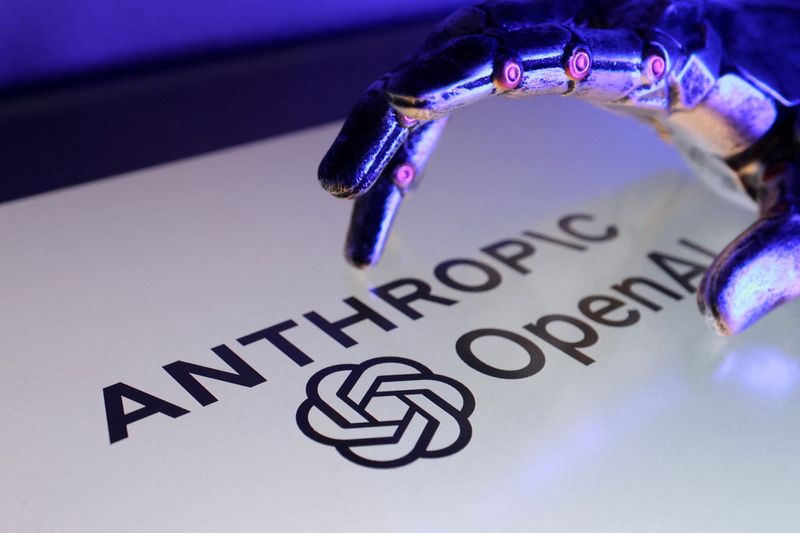
European and U.S. software stocks faced significant challenges as a sector-wide selloff intensified, impacting markets in Asia and raising concerns about the potential disruption caused by advances in artificial intelligence (AI). The downturn was triggered by fears that new AI technologies could significantly alter traditional business models, leading investors to reconsider their portfolios.
European software and data analytics stocks experienced sharp declines for the second consecutive day, mirroring a broader global trend. Notably, the introduction of Anthropic’s new legal AI tool highlighted the perceived risks to companies that are particularly vulnerable to AI advancements. This unsettling development comes despite assurances from Nvidia CEO Jensen Huang, who dismissed the notion that AI would completely replace existing software and related tools, calling such assertions “illogical” and suggesting that “time will prove itself.”
Concerns among analysts indicate that the recent sell-off is driven by a defensive approach among investors aiming to insulate their investments from the threat of AI disruption. The rapid pace of technological change is complicating valuations and obscuring business forecasts, straying from the typical three-to-five-year outlook for many companies. Notably, software firms are seen as particularly at risk, as AI tools increasingly automate the basic tasks that support pricing structures within the industry.
J.P. Morgan analyst Toby Ogg noted, “We are now in an environment where the sector isn’t just guilty until proven innocent but is now being sentenced before trial.” He pointed to a general reluctance among investors to jump back into the sector, highlighting potential risks such as competition from AI-native firms and clients opting to develop in-house solutions.
In the UK, major analytics providers like RELX and Wolters Kluwer witnessed significant stock declines, dropping around 3% in morning trade after steep losses the previous day. American software firms also experienced instability, with mixed premarket trading following a near 13% fall over five consecutive sessions. Thomson Reuters, for instance, saw its shares remain flat in light trading after a dramatic 16% drop, fueled by worries about AI’s impact on its legal division.
The London Stock Exchange Group also faced a downturn, extending its recent losses further. Software companies from India and Japan were not spared either, as major IT exporters and vendors like NEC, Nomura Research, and Fujitsu suffered declines ranging from 8% to 11%, contributing to a lower Nikkei benchmark index.
A key contributor to the selloff was Anthropic’s launch of plug-ins for its Claude Cowork agent, which enables task automation across various sectors including legal and sales, raising alarm about the viability of traditional business models in the face of emerging competition.
Advertising firms, often seen as exposed to AI success, also came under pressure, with France’s Publicis and the UK’s WPP seeing share prices hit new lows. In Europe, SAP, the continent’s largest software provider, dipped over 3% after a disappointing forecast regarding cloud revenue, resulting in a significant $40 billion loss in market value.
As advancements in AI propel stocks like Nvidia and Microsoft to new heights, there is growing apprehension from regulatory bodies, including the International Monetary Fund and the Bank of England, about a potential market bubble. Experts warn that while innovation often brings disruption, the current landscape signifies a pivotal moment for software and IT service firms. “There is a lot of uncertainty around exactly what AI agents can do, and as such, investors are choosing to shun the software market altogether, leaving nowhere to hide,” stated Ben Barringer, head of technology research at Quilter Cheviot.
In U.S. premarket trading, notable players like Salesforce, CrowdStrike, and Adobe all experienced slight declines, while Intuit saw a marginal drop of 0.6%. In contrast, Atlassian Corp managed to gain 0.6%, standing out amidst the broader market turmoil.