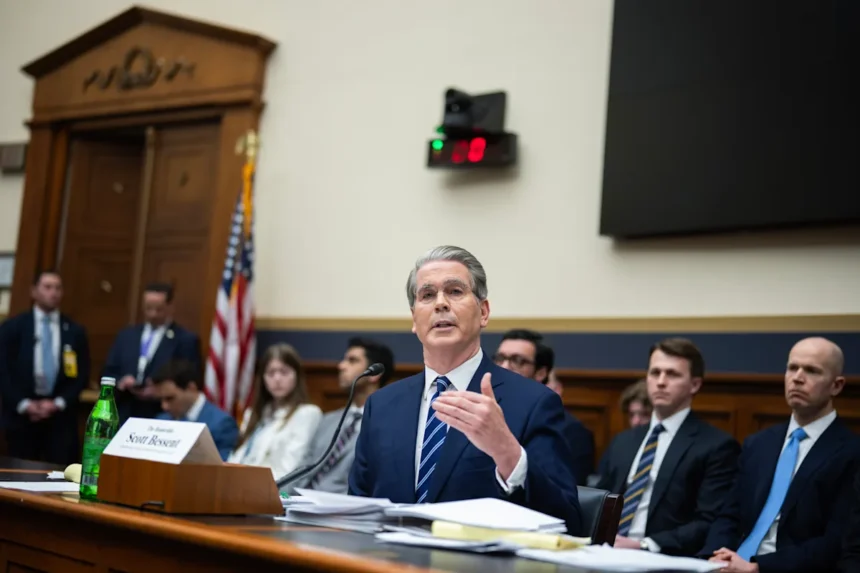
Bitcoin experienced a significant downturn on Wednesday night, dipping below $73,000 per token. This decline extended a losing streak stemming from the earlier session when Treasury Secretary Scott Bessent indicated that the U.S. government does not intend to intervene to support the cryptocurrency market.
During a contentious exchange at a House Financial Services Committee meeting, Bessent was questioned about whether the U.S. Treasury had the capability to purchase Bitcoin or other cryptocurrencies. He firmly stated, “I do not have the authority to do that, and as chair of FSOC, I do not have that authority.” This assertion heightened concerns over the potential for government support in the cryptocurrency sector.
The drop in Bitcoin’s price was compounded by broader market selling pressures and remarks from well-known investor Michael Burry. Burry warned that a prolonged decrease in Bitcoin’s value could trigger a “death spiral” with considerable repercussions for investors. He characterized Bitcoin as “a purely speculative asset,” arguing that it fails to serve as a reliable hedge against inflation, unlike traditional safe havens such as gold and other precious metals.
As a result of the recent downturn, Bitcoin has now fallen 17% year-to-date, marking its fourth consecutive month of losses. The cryptocurrency’s steep decline was exacerbated by President Trump’s recent nomination of Kevin Warsh to lead the Federal Reserve, a move seen as potentially hawkish by market analysts.
Other digital currencies, including Ether, also saw declines, reflecting the broader weaknesses within the crypto market. According to strategists at 10X Research, the current market sentiment has shifted significantly, with Bitcoin now at a crucial support level around $73,000. They indicated that investors are not yet inclined to “buy the dip,” and highlighted that while sentiment and technical indicators are nearing extreme levels, the overarching downtrend remains intact.
The report emphasized that, without a clear catalyst, traders appear more focused on unwinding their positions rather than preparing for a rebound in prices. The struggles of Bitcoin can be traced back to last October when significant sell-offs by large holders and forced liquidations created turbulence in the market.
Fundstrat’s head of digital assets, Sean Farrell, noted that the mid-$70,000 range is a logical support zone for Bitcoin, referencing earlier intraday trading highs and lows that coincide with this price level during previous market fluctuations. As market participants watch closely, the future of Bitcoin hangs in the balance amid current uncertainties.