The S&P 500 index is currently experiencing a modest increase, having advanced 1% year-to-date and sitting near its record high. However, analysts are cautioning that a significant decline may be on the horizon in 2026. A combination of high valuations, sweeping tariffs from the Trump administration, and the impending midterm elections could create a turbulent environment for investors.
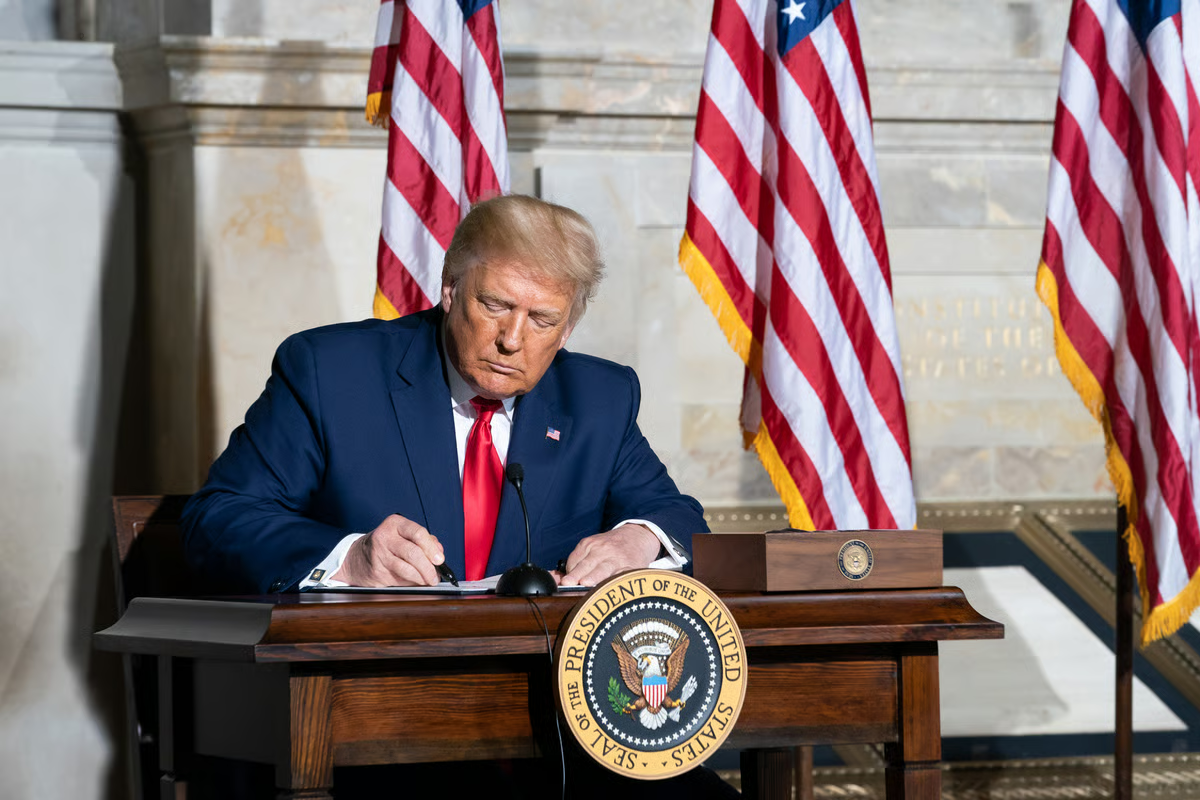
President Trump has touted the effectiveness of his tariffs, claiming they are strengthening the U.S. economy and asserting that exporters are primarily bearing the financial burden. However, data paints a different picture. In a recent editorial in The Wall Street Journal, Trump emphasized that his administration’s tariffs have led to “extraordinarily high economic growth.” Yet, while the U.S. economy showed robust growth in the latter half of 2025, it contracted in the first quarter, resulting in a collective increase in real GDP of just 2.51% for the first nine months of the year, falling short of historical averages.
Furthermore, research from the Federal Reserve Bank of St. Louis shows that spending on artificial intelligence contributed nearly a full percentage point to real GDP growth during that same period. Without this boost from AI, real GDP growth would have slowed to a mere 1.54%.
In his editorial, Trump claimed a Harvard Business School study supports his assertion that the tariff burden has largely fallen on foreign producers. However, the study’s findings contradict his statement, indicating that U.S. consumers have borne as much as 43% of the costs associated with these tariffs. The implications of these tariffs, combined with rising prices, have raised questions about the sustainability of economic growth.
Looking ahead, the S&P 500 currently trades at a forward price-to-earnings (P/E) ratio of 22.2, a notably high valuation by historical standards. Such elevated valuations have historically foreshadowed market downturns, particularly during past periods like the dot-com bubble and the COVID-19 pandemic. Wall Street analysts are projecting stronger earnings for S&P 500 companies in 2026, but if these companies do not meet heightened expectations, a market decline appears likely.
Additionally, the S&P 500 typically faces challenges in midterm election years, which historically bring heightened uncertainty. Data shows that the index has encountered a median intra-year drawdown of 19% during such years. Political volatility often leads to concerns about future fiscal, trade, and regulatory policies, contributing to market instability.
In summary, the combination of high valuations, the impact of tariffs, and the uncertainty surrounding midterm elections sets the stage for potential market turbulence in 2026. While the landscape may look daunting for investors, historical trends suggest that past market retracements have often created buying opportunities, and there’s reason to believe that the next downturn may follow suit.