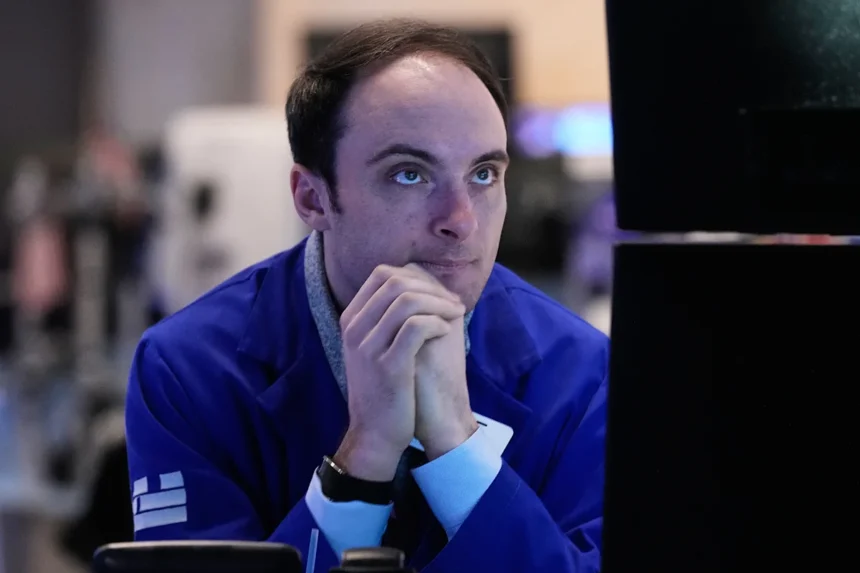
In a striking turn of events, stock and credit markets have experienced a significant downturn, marking one of the most severe selloffs in the three years since ChatGPT gained prominence. The recent market turbulence saw hundreds of billions of dollars evaporate from the valuations of companies across Silicon Valley, reflecting an unprecedented speed and scope.
Software stocks, in particular, bore the brunt of this market upheaval, with the value tracked by an iShares ETF plummeting nearly $1 trillion within the span of just a week. This decline has raised eyebrows among investors and analysts alike, as it signals a shift from typical selloff triggers such as bubble fears. Instead, market participants are increasingly concerned that artificial intelligence could disrupt the business models of numerous companies, a reality that has long been forecasted by skeptics.
Michael O’Rourke, chief market strategist at Jonestrading, emphasized that the current market reaction is warranted, noting, “For two years, we have been talking about how AI is going to change the world and that it is a multi-generational technology.” He underscored that recent developments in AI have begun to manifest in practical applications, solidifying the urgency felt by investors.
The catalyst for the current downturn can be traced back to a seemingly benign announcement from AI startup Anthropic PBC, which unveiled a new tool designed for legal work, such as contract review. While this specific product is not hailed as a revolutionary advancement, it comes on the heels of a year where Anthropic’s tools made significant waves in software development. This context added weight to the announcement, leading analysts to speculate on far-reaching implications.
Jackson Ader, an analyst at KeyBanc, noted the expansive potential impact of AI tools, suggesting that what starts in legal tech could easily extend into other sectors like sales, marketing, and finance. This transition underscores a broader trend of increasing AI integration across various industries, heightening the stakes for companies that may not adapt swiftly to these advances.
As investors grapple with the potential transformations brought on by AI, the financial markets appear to be in a state of flux, reflecting a combination of hope and apprehension regarding the future landscape of business and technology.