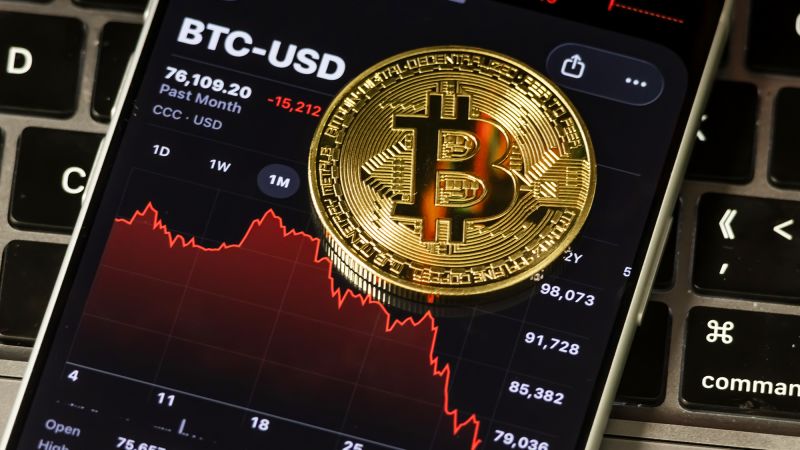
Bitcoin has recently experienced a significant downturn, falling 44% from its October peak and dropping below $70,000 for the first time in 15 months. This decline, while steep, is not particularly surprising given the cryptocurrency’s notorious volatility, which has seen worse crashes in the past.
What makes this situation unusual is the timing of Bitcoin’s slump. Many enthusiasts had expected Bitcoin to serve as a “digital gold,” a safe haven investment that traders could turn to during times of uncertainty. Such a scenario would seem ideal, especially amidst escalating geopolitical tensions. For instance, President Trump has been vocal about possible military action against Iran, and rising tariffs on South Korea have been in the news, fostering an environment rife with apprehension.
Concurrently, advancements in artificial intelligence are sending chills through stock market investors. Reports about AI models like Anthropic’s Claude, which can perform tasks traditionally done by law firms, have sparked fear in tech stock valuations. Current market sentiment is reflected in CNN’s Fear and Greed Index, which indicates a prevailing atmosphere of fear, while the VIX index recently reached peaks last seen during a market downturn earlier this year.
As fears mount, gold prices have surged to record highs, recently surpassing $5,500 per troy ounce. Gold remains the classic safe haven because of its intrinsic value and tangibility, even allowing it to be kept securely at home if necessary. In stark contrast, Bitcoin has lost about 20% of its value this year amid rising uncertainties and has not benefited from the market’s ‘risk-off’ mentality. Financial commentator Michael Burry suggested that the volatility in gold and silver prices could be linked to Bitcoin investors liquidating their metal holdings to compensate for crypto’s decline.
This downturn has erased the so-called “Trump bump” experienced after his 2024 election victory, when optimism about his pro-cryptocurrency stance led to a spike in Bitcoin and other cryptocurrencies. Now, doubt looms over Bitcoin’s status as a true safe-haven asset. As market sentiments turn bearish, traders see the prevailing fear as reason to sell rather than buy, leading to a noticeable divergence between the performance of gold and Bitcoin.
Further complicating matters, Treasury Secretary Scott Bessent’s recent testimony before the House Financial Services Committee highlighted a lack of governmental authority to stabilize cryptocurrency markets, adding to investors’ worries.
However, the current situation might not signify a permanent shift for Bitcoin. Historical trends indicate that Bitcoin has rebounded after prior downturns. Following significant crashes in 2014, 2018, and consecutive declines in 2021 and 2022, Bitcoin managed to recover within approximately a year and a half each time. This resilience raises the question of whether a comeback could be in the cards for the cryptocurrency, despite the current bleak outlook.