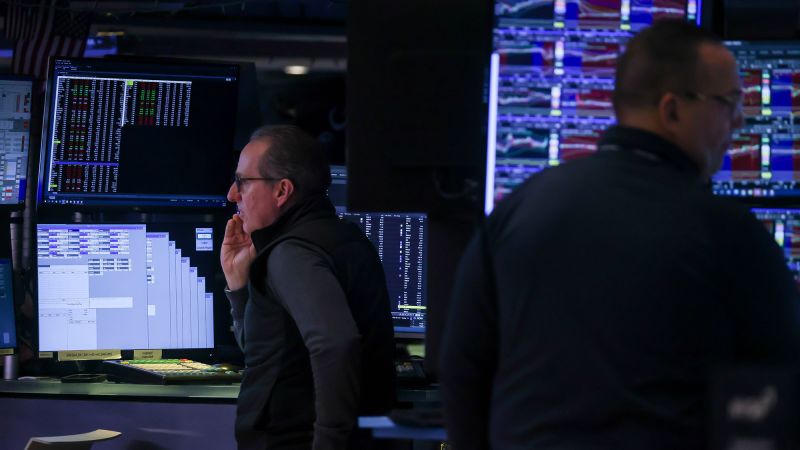
US stocks experienced a significant decline on Thursday, as market volatility persisted amid concerns regarding artificial intelligence and signs of a weakening labor market. The Dow Jones Industrial Average fell by 637 points, or 1.29%, while the S&P 500 dropped 1.37%. The tech-heavy Nasdaq Composite suffered the most, plummeting 1.74%.
Wall Street’s volatility indicator, the VIX, saw a substantial surge of 22%, crossing the 20-point threshold, which is often associated with heightened market turbulence. The Nasdaq appeared poised for its worst three-day drop since April, as apprehensions grew over the potential disruptions AI could bring to the software industry. An exchange-traded fund focused on software companies declined 3% and marked its eighth consecutive day of losses.
Strategist Mohit Kumar from Jefferies highlighted that the recent release of Anthropic’s plugin served as a short-term catalyst for investors grappling with the broader implications of AI in software development. Kumar indicated that a prevailing market sentiment is to “shoot first and ask questions later,” accentuating concerns about private equity and private credit companies due to their exposure to the evolving tech landscape.
As the corporate earnings season unfolds, Wall Street is also closely monitoring how effectively major tech firms can capitalize on their investments in AI. Microsoft’s shares fell 3.2%, marking a downward trend over five out of the last six trading sessions following its earnings report the previous week. Similarly, Alphabet’s stock was down 4.5%, the lowest it had been since May, after the company outlined plans for increased investment in data centers and AI initiatives.
The technology sector’s distress also impacted cryptocurrencies, with Bitcoin dropping below $67,000, reaching its lowest point in 15 months. In a surprising twist, gold, typically viewed as a safe haven during uncertain times, fell by 2.3%, and silver plummeted 13%, reflecting extraordinary volatility in the precious metals market.
As losses continued into the morning, economic reports painted a concerning picture of the U.S. labor market. The Job Openings and Labor Turnover Survey revealed December job openings fell to their lowest levels since 2020, according to the Bureau of Labor Statistics. This disappointing data followed a report from Challenger, Gray & Christmas, denoting last month as the worst January for job cut announcements since 2009.
Amid these developments, CNN’s Fear and Greed Index lingered in the “fear” zone, underscoring the prevailing market anxieties. The combination of disruptive technological advancements and weakening economic indicators has left investors uncertain, prompting a cautious approach in trading.