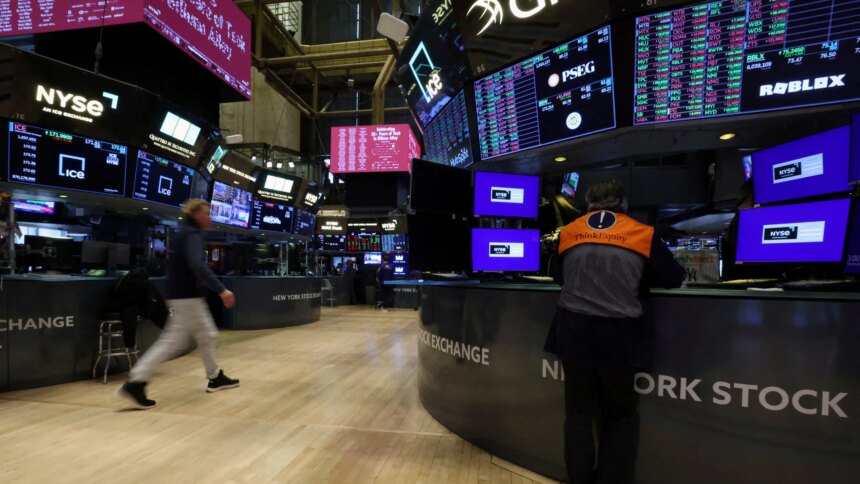
Financial markets experienced a significant downturn on February 5, driven by escalating concerns surrounding the economy and the overheated conditions of various asset classes. Shortly before noon on Wall Street, key indices reflected this sentiment: the S&P 500 was down over 1%, hovering around 6,810, while the Dow Jones Industrial Average also fell by 1% to approximately 49,025. The Nasdaq Composite, heavily influenced by technology stocks, declined by 1.2%, trading close to 22,636. Notably, all three indices managed to recover slightly from their earlier lows.
Concerns about the corporate landscape have been fueled by mixed signals from earnings reports concerning the impact of artificial intelligence (AI) on financial performance. Following a revealing announcement from Alphabet, Google’s parent company, indicating plans to invest up to $185 billion in capital projects to integrate new technologies, the stock saw a decline of more than 3% by late morning on February 5.
Economic data released on February 4 suggested a more pronounced weakening of the labor market than analysts had anticipated. Notably, planned job cuts reached levels not seen since 2009, alongside a decline in job openings. This trend has raised alarms among investors regarding the overall economic outlook.
In a worrying turn for the cryptocurrency market, Bitcoin plummeted to its lowest value since 2024. This decline was exacerbated by comments from prominent investor Michael Burry, who warned that the cryptocurrency’s falling prices might trigger a “death spiral” that could lead to significant value destruction. Burry, known for his accurate predictions before the 2008 financial crisis, indicated that some investors could be forced to liquidate other assets to cover losses stemming from their Bitcoin investments.
Contributing to the bearish sentiment, Treasury Secretary Scott Bessent informed Congress on February 4 that the U.S. government would refrain from purchasing Bitcoin or other cryptocurrencies to stabilize their prices. Consequently, Bitcoin was trading around $67,389, reflecting an 8.5% drop, while Ethereum saw a more than 7% fall, resting near $1,966. Meanwhile, gold prices decreased by another 2%, settling at approximately $4,851 per ounce.
Even government bonds faced selling pressure, with the benchmark 10-year U.S. Treasury yield sliding nearly 7 basis points to about 4.206%, underscoring the widespread unease gripping financial markets.