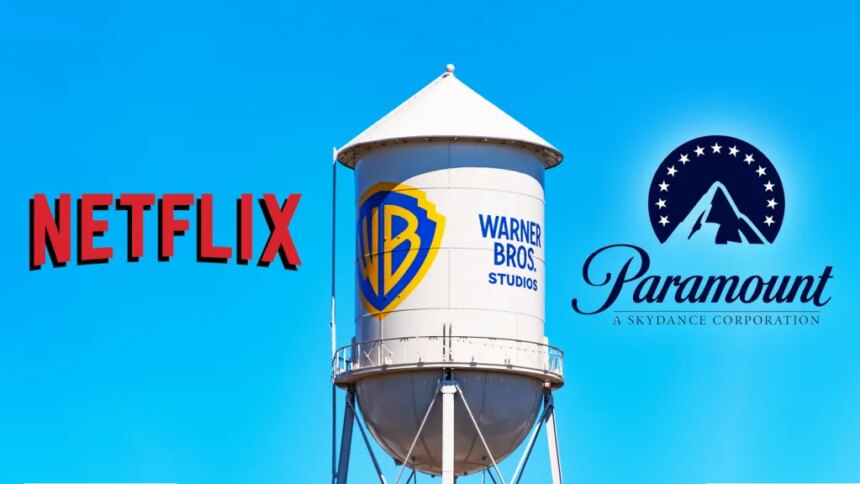
In a significant move that underscores the critical role of job preservation in the entertainment industry, Senator Adam Schiff and Representative Laura Friedman, both Democrats from California, are urging Netflix and Paramount to commit to maintaining and expanding film and television jobs amid the ongoing acquisition discussions concerning Warner Bros. Discovery (WBD).
The lawmakers addressed a letter to Ted Sarandos and Greg Peters, co-CEOs of Netflix, and David Ellison, CEO of Paramount, demanding “concrete steps” aimed at safeguarding the livelihoods of workers in Los Angeles’ vibrant entertainment sector. The letter highlights the necessity for measurable actions that ensure California and Hollywood remain global leaders in storytelling, innovation, and creative employment.
One of the key issues raised by Schiff and Friedman pertains to how the two companies plan to collaborate with unions representing thousands of entertainment employees and facilitate workforce growth. The lawmakers are also pressing for assurances regarding the responsible use of artificial intelligence, emphasizing that it should not lead to workforce displacement.
Additionally, the representatives are advocating for commitments to halt the ongoing offshoring of production and to bring more work back to the United States under the existing tax system. Their letter points to ongoing efforts to establish a federal film tax incentive, citing the trend of productions moving overseas to capitalize on generous financial incentives.
The current review of Netflix’s proposed acquisition of Warner Bros., HBO, and HBO Max by the Justice Department is significant, particularly as WBD plans to spin off its cable assets, including CNN and TNT, into a separate entity. Similarly, Paramount’s approach towards a hostile bid for WBD is also under scrutiny by the DOJ.
The lawmakers expressed concerns over the planned cost-saving measures post-merger, highlighting that Paramount anticipates cutting $6 billion in expenses over three years, while Netflix projects cuts between $2 billion and $3 billion. Analysts have warned that these cost reductions are likely to result in substantial job losses.
Schiff touched on several of these issues during a Senate Judiciary antitrust subcommittee hearing, where Sarandos characterized the acquisition as “pro-competitive.” Sarandos assured that Netflix intends to maintain the operational independence of the entities involved, with a focus on boosting production investments in an improved business landscape after the merger.
Netflix has attributed its anticipated cost savings primarily to reductions in administrative expenses and the elimination of overlapping technological systems, with these savings expected to materialize in the third year post-acquisition.
While a spokesperson for Paramount did not immediately respond to requests for comments, Ellison recently conveyed his commitment to enhancing creative output in an open letter to the UK’s creative community. He stressed the importance of a diverse marketplace that fosters competition, rather than one that stifles it by forming a dominant entity.