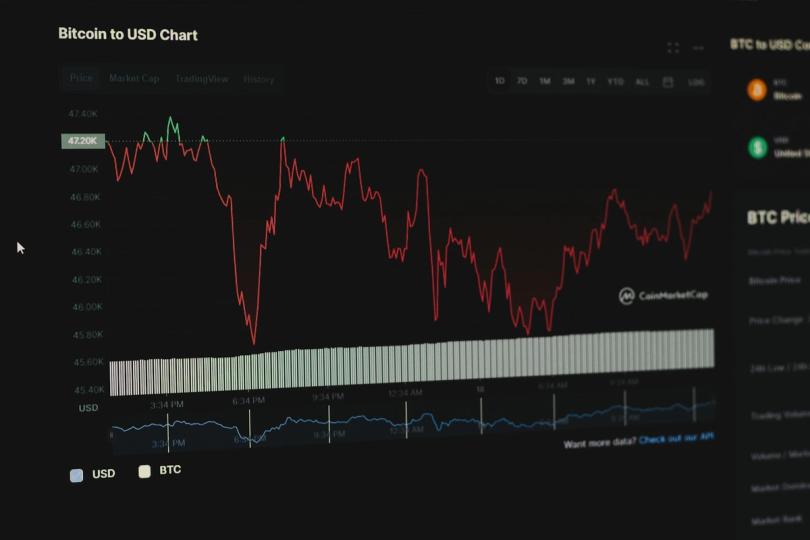
Bitcoin has shown signs of recovery after dipping to around $60,000 recently, climbing back to approximately $69,000. Despite this bounce back, the cryptocurrency has relinquished much of the gains it garnered following Donald Trump’s election in November 2024. This retracement occurred amid a wider market sell-off, with the CoinDesk 20 (CD20) index experiencing a decline of over 17% within the week.
In the past week, Bitcoin’s price has decreased by roughly 16.5%. However, several other cryptocurrencies fared even worse: Ether plummeted by 22.4%, BNB dropped 23.4%, and Solana faced a significant decline of 25.2%. Although Bitcoin briefly surged back above the $70,000 mark on Friday, shares of crypto-related companies witnessed substantial declines throughout the week.
The turbulence in Bitcoin’s prices was largely attributed to a substantial sell-off, characterized as one of the most severe daily downturns since the FTX collapse. According to Jasper De Maere, a desk strategist at Wintermute, market-wide liquidations contributed to a frantic “sell at any price” sentiment, which fueled greater market instability. He noted that institutional trading desks reported a manageable level of liquidations, but this did not fully account for the significant market movement, prompting discussions about the overall stress within the crypto ecosystem.
The negative sentiment was amplified by broader market trends, as exemplified by the Nasdaq 100 tracker QQQ, which fell about 500 basis points over three sessions. Precious metals such as silver and gold also experienced declines, falling around 38% and 12% from their cycle highs, respectively. In the options market, Bitcoin’s implied volatility reached the 99th percentile, with many traders opting for put options—a strategy seen as protective against further declines.
Ether was identified by De Maere as the “epicenter of the pain,” as many traders sought to hedge against further losses. Positioning data indicated expectations of continued volatility, with traders eyeing a wide price range for Bitcoin, extending from approximately $55,000 to $75,000.
In a further blow to market sentiment, cryptocurrency exchange Gemini announced plans to cease operations in the U.K., European Union, and Australia while reducing its workforce by about 25% as part of a significant restructuring effort. Users in these regions will transition to withdrawal-only modes and will work with brokerage platform eToro to transfer their assets.
Amid the turmoil, Bitfarms saw its shares increase after it rebranded from a “bitcoin company” to an entity focused on artificial intelligence (AI) infrastructure.
Market structure challenges also contributed to the volatility. Bitcoin’s average 1% market depth—a measure of how much can be traded near the current price without influencing the market—has decreased to approximately $5 million from more than $8 million in 2025. A lower market depth can lead to sharper price movements during trading.
Additional data revealed negative flows in spot Bitcoin ETFs, with around $1.25 billion of net outflows recorded over a three-day span. Furthermore, estimates suggested that ETF holders are currently facing significant unrealized losses, totaling around $15 billion.
Recent shifts in Bitcoin prices have shown a correlation with software stocks. After the release of a new AI automation tool by Anthropic, shares in notable software companies such as Salesforce, Adobe, and ServiceNow suffered losses of 8%, 9%, and 13%, respectively. This relationship prompted analysts like Jonathan Krinsky from BTIG to remark on the parallel trends, indicating that both Bitcoin and software stocks may have reached tactical lows. He expressed optimism about Bitcoin’s potential to establish a more stable trading range, contingent on it moving above a key resistance level of $73,000.
Overall, despite the recent bounce back, Bitcoin’s journey remains tumultuous, reflecting greater market dynamics tied to both broader economic factors and specific industry developments. The ongoing pro-crypto stance of the Trump administration had previously propelled Bitcoin to record highs, but the current climate suggests volatility may continue in the near term.