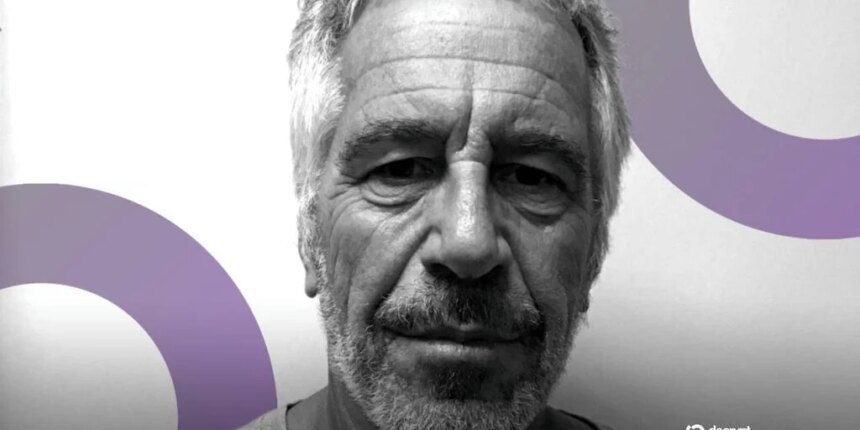
Files recently released by the Department of Justice relating to convicted sex offender and financier Jeffrey Epstein have revealed significant insights into his connections to the cryptocurrency world, unearthing a trove of communications and investments that reflect his early engagement with the sector.
Analysis of these documents illustrates Epstein’s interactions with prominent figures in the crypto space, including notable early builders and backers of various projects. The revelations suggest that Epstein had a clear understanding of the potential for cryptocurrencies and blockchain technology, engaging with influential individuals and firms well-known in the industry.
One of the standout findings is Epstein’s investment in Coinbase, a leading crypto exchange. Through emails, it has been confirmed that he invested $3 million in 2014, facilitated by Brock Pierce, a co-founder of Tether and previously involved with Blockchain Capital. Interestingly, Blockchain Capital clarified that Epstein made this investment independently. At the time of his investment, Coinbase was valued at approximately $400 million; it has since soared to a market valuation of roughly $44 billion. Further, emails indicate that Epstein sold a portion of his stake back to Blockchain Capital in 2018, after years of maintaining his investment.
Epstein’s engagement with Bitcoin extended beyond investments; he sought clarity on regulatory and tax implications associated with the cryptocurrency ecosystem as early as 2018. Discussions he had with Steve Bannon, a former advisor to Donald Trump, shed light on his perspective on Bitcoin regulation, suggesting a voluntary disclosure form for crypto gains that would target “bad actors.”
Correspondence between Epstein and Brock Pierce also reveals a relationship that extended beyond business. Emails show Pierce discussing various social interactions and instructing Epstein to “find him a present.” They also included references to a past romantic entanglement of Pierce’s, which reportedly ended abruptly. Notably, one of their meetings took place at Epstein’s Manhattan townhouse, where discussions revolved around Bitcoin and its potential opportunities, even as concerns about reputational damage loomed over their deliberations.
Moreover, revelations have confirmed Epstein’s investment in Blockstream, a prominent Bitcoin infrastructure firm. Early Bitcoin developer Adam Back referenced Epstein’s position as a limited partner in an associated fund, indicating that his financial involvement was supported by credible figures in the Bitcoin community. In a twist of irony, while Blockstream has distanced itself from Epstein, some members within the Bitcoin community have called for accountability regarding past associations.
Epstein’s communications with Peter Thiel, a prominent venture capitalist, also reflected on the multifaceted narrative surrounding Bitcoin. In an email exchange, Epstein articulated the confusion around Bitcoin’s identity, querying its legitimacy as a store of value or currency against a backdrop of rising governmental scrutiny.
Interestingly, Epstein’s publicist once referred to Michael Saylor, Executive Chairman of Strategy and a prominent Bitcoin advocate, as “a creep” in a critique of his social demeanor. Despite such assessments, Saylor’s firm would later draw significant attention for its substantial Bitcoin acquisitions, amassing nearly $50 billion in assets.
Ultimately, Epstein’s paradoxical concern about maintaining ethical standards in cryptocurrency funding stands out, as he grappled with the implications of involvement in projects marred by questionable ethics. In communications with Bitcoin researcher Jeremy Rubin, he expressed his hesitance about the ethical ramifications tied to crypto investments, suggesting a recognition of the moral complexities entangled in the industry.
Lastly, while Vitalik Buterin, co-founder of Ethereum, was mentioned in the files, the references did not indicate direct correspondence. Instead, they highlighted a discussion about identifying a young, talented blockchain enthusiast from Russia, suggesting that Epstein remained engaged with emergent talent in the crypto space.
As these documents continue to unveil Epstein’s associations and interests in the cryptocurrency domain, the revelations have sparked conversations about the intersections of finance, ethics, and the evolving landscape of digital currencies.