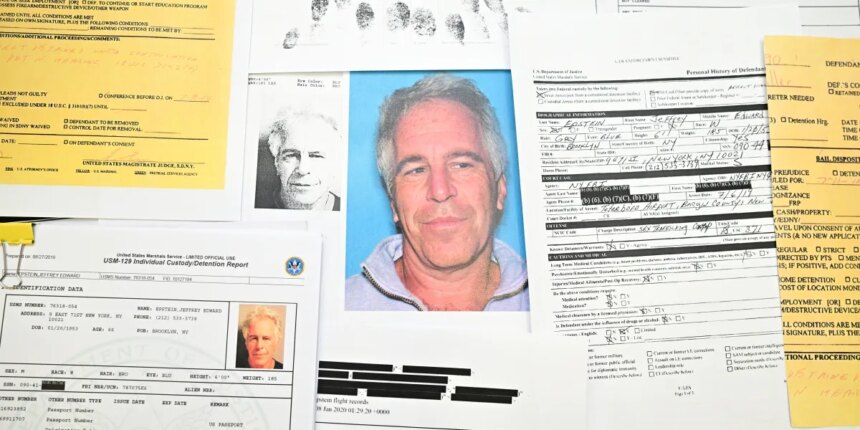
Recent revelations from the Department of Justice have shed light on the late Jeffrey Epstein’s involvement in the burgeoning cryptocurrency sector. Known for his connections with powerful figures across finance and politics, Epstein’s investment trajectory extended to major players in the crypto space, notably U.S. crypto exchange Coinbase and Bitcoin infrastructure firm Blockstream.
Before his death in 2019 while incarcerated, Epstein had reportedly invested in Coinbase, albeit a small stake that accounted for less than 1% of the company’s equity. His investment in Blockstream came from another fund, details of which remain undisclosed. The timeline of when or how Epstein became interested in the cryptocurrency market remains unclear, yet the two investments highlight his ability to forge influential ties within different tech and financial sectors, even following his 2008 conviction on charges related to solicitation of prostitution with a minor.
Coinbase representatives declined to comments on Epstein’s investment, and Blockstream has yet to respond.
During the early 2010s, Brock Pierce, a former child actor and notable figure in the crypto community, began guiding Epstein on several crypto investments while serving as managing partner at a venture capital firm initially called Crypto Currency Partners, which later rebranded to Blockchain Capital. Pierce was an early advocate for cryptocurrency, co-founding the stablecoin company Tether, which has since grown to be a dominant force in the space.
The Justice Department’s newly released documentation indicates that Pierce approached Epstein in 2014 to discuss an investment in Coinbase. Epstein expressed interest, inquiring about the timeline and difficulty of the investment, as reflected in an email he sent to Reid Hoffman, LinkedIn’s co-founder. Ultimately, Epstein committed to a $3 million investment in Coinbase’s Series C funding round in 2015, which valued the exchange at approximately $400 million. Subsequent correspondence confirmed that Epstein’s investment materialized, and a trust linked to him even sold $15 million worth of Coinbase equity to Blockchain Capital in 2018.
It is important to note that neither Pierce, Blockchain Capital, nor Coinbase has been implicated in any wrongdoing connected to Epstein.
Epstein’s investment portfolio in the crypto space was not confined to Coinbase; he also directed funds to Blockstream in 2014, a firm instrumental in early Bitcoin development. Communications between Epstein and Blockstream co-founders Austin Hill and Adam Back indicated Epstein received substantial research and insights into Bitcoin’s potential. Back recently mentioned that Epstein was introduced through Joi Ito, the former director of MIT Media Lab, in his capacity as a limited partner in Ito’s investment fund. Following scrutiny, Ito’s fund divested its Blockstream shares over concerns related to conflicts of interest, emphasizing that the company has no direct or indirect ties to Epstein.
In a twist, Epstein missed opportunities to engage earlier with other prominent figures in the crypto world, such as Michael Saylor, who later led the pivot of MicroStrategy into one of the largest Bitcoin holders globally. Saylor, however, was not well-received by the publicist Peggy Siegal, who disparaged him in correspondence with Epstein, labeling him a “complete creep.”
To date, Siegal, Hill, Back, Blockstream, Ito, and Saylor have not been connected to any allegations of misconduct concerning Epstein.
As the cryptocurrency landscape continues to evolve, the emerging details about Epstein’s investments reveal a complex interplay between his past, his financial maneuvers, and the burgeoning tech industry’s response to his legacy.