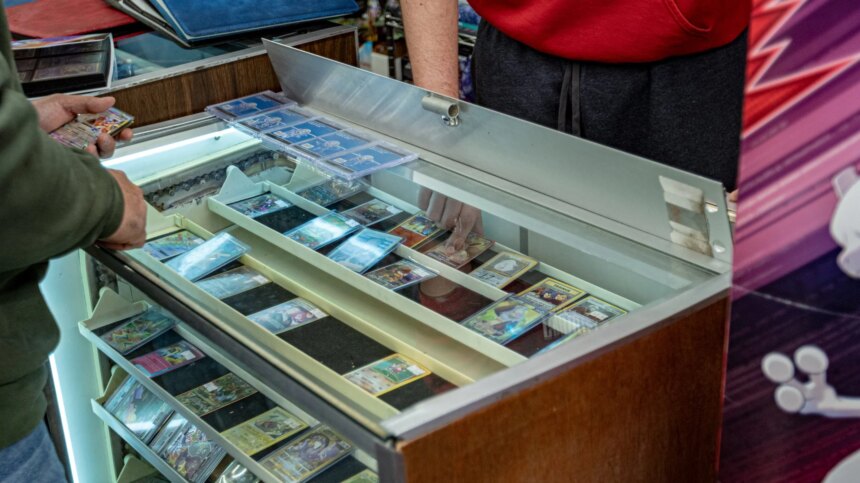
On a typical weekday afternoon, the atmosphere at PokéOasis, a trading card shop in Fort Worth, buzzes with excitement as customers wander in and out. They examine glass cases, flipping through binders and negotiating trades. Just a few miles away, Galactic Gamez showcases retro consoles and tabletop games alongside shelves filled with trading cards, encapsulating a growing trend that sees collectibles garnering serious attention from players, long-time collectors, and investors alike.
The global trading card market, previously viewed as a niche hobby primarily for children, was valued at $8 billion last year, with projections suggesting it could soar to nearly $12 billion by 2031, according to market research from Mordor Intelligence. Amadeo Herrera, the owner of PokéOasis, has witnessed this surge firsthand. He notes a diverse customer base that includes not only longstanding fans of Pokémon cards but also newcomers attracted by the potential for profit.
“It’s pretty huge right now, and it’s still growing,” Herrera said. He describes a wide mix of participants—from long-term players and enthusiasts to speculators hoping to turn a quick profit—attending his store.
At Galactic Gamez, employees like Tyler Cox have observed a shift in customer demographics. “Cards have overtaken nearly every other category of collectibles,” he remarked, noting that adult customers are increasingly purchasing Pokémon cards, sometimes without the companionship of their children.
The evolution of these stores illustrates the changing landscape of collectible hobbies. Herrera’s journey began in 2021 via social media, eventually leading to a physical storefront in 2023. His original focus on online sales has transitioned to regular travels for card shows across the country as he seeks to engage with the broader market.
Despite the thriving interest, both shop owners express frustrations related to inventory challenges and market dynamics. Automated purchasing tools and early big-box retail releases have disrupted traditional sales, often favoring collectors but hindering local retailers. Cox noted that these automated systems can deplete online stocks within minutes, forcing customers to return to local shops for physical products.
“There’s not enough to go around,” he said, reflecting on the challenges presented by these purchasing methods. The divide between true hobbyists and those in search of quick gains is evident, with some players expressing disdain for the rapid speculation characterized by scalpers who shift their focus between card games.
Price volatility is another significant issue within the trading card community. For instance, the value of the Mega Charizard EX card has fluctuated widely—prices that reached over $900 at release dwindled to around $400 just weeks later. Such instability prompts shop owners to rethink inventory strategies as online pricing adjusts faster than they can adapt.
Both Herrera and Cox underscore the importance of in-person transactions despite the rise of online marketplaces, highlighting the emotional connection many collectors feel to physical items. “A lot of people are really wanting the original thing right now,” Cox explained, noting that nostalgia drives demand for retro game cartridges and original memorabilia.
Customers often buy collectibles for sentimental reasons, sometimes acquiring items they can no longer use but still cherish for their emotional value. Amadeo Herrera showcases cards valued at an astonishing $500,000, including highly prized Pokémon cards, some with their value dictated by market perception and scarcity.
As both stores navigate this evolving landscape, the appeal of trading cards remains robust. Cox anticipates a normalization in speculative activities, as historical patterns suggest cycles of demand that come and go. “People are just waiting until the ‘poke-bros’ drop out,” he commented, alluding to a potential cooling off of the market.
In Fort Worth, the thriving trading card scene exemplifies a transition from mere hobbyism to a realm that engages both heartfelt nostalgia and the potential for significant financial reward.