Recent analysis indicates a potential easing of selling pressure in the Bitcoin market, as on-chain data reflects a shift in dynamics. Following a notable drop last week that saw Bitcoin hit its lowest value since the election of Donald Trump for a second term, large holders—often referred to as “whales”—have reportedly purchased over 54,000 BTC during this downturn, suggesting a strategic “buy the dip” approach.
However, experts advise caution, emphasizing that mere stabilization does not necessarily imply a definitive trend reversal. The current market environment is characterized by tight liquidity, uncertainty regarding policy, and reduced flows from exchange-traded funds (ETFs) and institutional investors. Moreover, evolving regulatory frameworks are exerting additional pressure on investor sentiment, despite emerging signs of stabilization within the on-chain metrics.
Currently, Bitcoin is trading around $69,600, which reflects a decline of more than 44% from its previous all-time high of $126,080 recorded on October 6. This significant downturn has prompted discussions about whether the broader cryptocurrency landscape has entered bearish territory. Nevertheless, certain on-chain indicators suggest potential market recovery, albeit against a backdrop of challenging macroeconomic conditions.
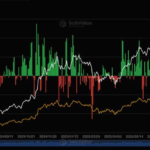
The spot cumulative volume delta, a measure reflecting the balance between aggressive buyers and sellers in the spot market, remains notably negative at approximately minus $327 million. According to data from Glassnode, this level has historically signaled seller exhaustion, rather than renewed distribution pressure. Meanwhile, the presence of large accumulation addresses—entities that engage in buying without subsequent outgoing transactions—has been underscored, with a recorded acquisition of 54,458 BTC during last week’s market dip.
This trend of whale accumulation often precedes market stabilization. However, analysts like Tim Sun from HashKey Group caution that such accumulation primarily functions to normalize price ranges and absorb selling pressure rather than trigger immediate upward momentum. Their observations indicate that the share of Bitcoin supply held in profit has decreased to around 55%, with the majority of coins currently under water. This scenario often correlates with accumulation, as investors facing losses may be less inclined to sell, which could help mitigate downside risks and support a gradual price stabilization.
Despite these signals of hope, some market specialists remain skeptical. Jeff Mei, COO at BTSE, points out that the shifting dynamics mean that institutional investors now play a more substantial role in Bitcoin holdings, making future price movements largely contingent on their buying decisions. He believes that any forthcoming recovery in Bitcoin’s price will hinge on sustained demand from institutional buyers and alleviation of global financial tensions.
In summary, while there are indications of a potential end to the recent sell-off and signs of accumulation from large buyers, the market’s trajectory will greatly depend on the actions of institutional investors and the broader economic climate.