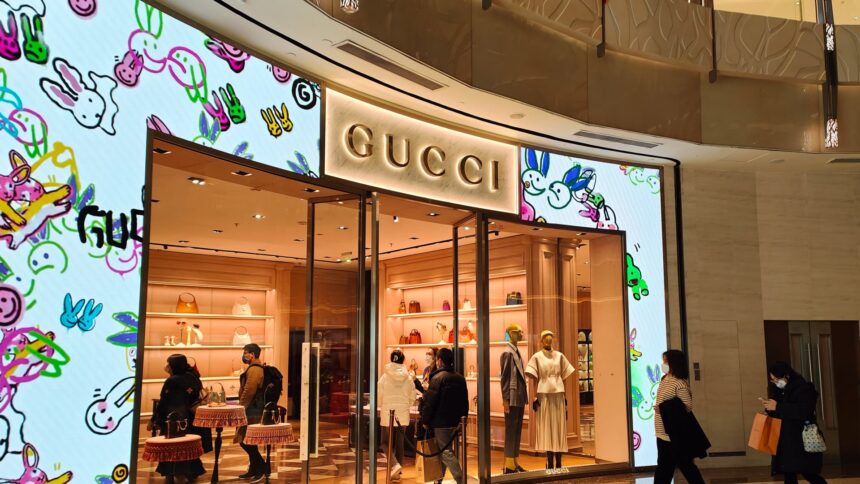
In a recent earnings call, Kering reported expectations of a return to growth amid ongoing sales challenges, particularly for its flagship brand, Gucci. The luxury goods conglomerate, which also owns renowned labels such as Yves Saint Laurent, Bottega Veneta, and Balenciaga, announced a 3% decline in fourth-quarter sales on a comparable basis, totaling 3.9 billion euros ($4.64 billion). Although this figure slightly surpassed FactSet estimates, it underscores the hurdles the company faces.
Gucci, under the watch of new CEO Luca de Meo, experienced a considerable 10% decline in sales on a comparable basis during this quarter, although this was marginally better than market expectations. Other brands in the portfolio reported either stagnant or moderate growth year-over-year. De Meo expressed disappointment regarding 2025’s performance, stating, “It didn’t reflect the full potential of Kering, and we all know it.”
In 2025, Kering’s overall sales fell by 10% to 14.7 billion euros, while recurring operating income plummeted by 33%, leading to an operating margin drop to 11.1%. Despite the current challenges, investor sentiment appeared to improve, with Kering’s shares soaring as much as 14% following the announcement, ultimately closing up about 11%. However, it remains notable that the stock has declined nearly 14% year-to-date.
This positive market sentiment extended to the broader luxury sector, benefitting other brands such as Burberry, which saw a 3.4% rise in its shares; Hermes, which increased by 3%; and Italy’s Brunello Cucinelli, up by 2.7%. Shares of LVMH and Richemont also experienced modest gains, reflecting an overall uplift in luxury stocks.
Kering, like many other luxury brands, has struggled in recent years after witnessing a surge in demand during the COVID-19 pandemic. This spike led to price increases that alienated some consumers, coupled with a decline in demand from China, traditionally a strong growth market. Strategic missteps have further complicated Kering’s fortunes, necessitating a shift in leadership and approach.
The appointment of Demna as the artistic director of Gucci aims to reinvigorate the brand and restore its reputation. His inaugural collection, “La Famiglia,” was launched last year amid these efforts. The market is now keenly observing De Meo’s initiatives to rejuvenate Kering, particularly as he became the first outsider to lead the company after being recruited from the automotive industry, where he successfully turned around Renault.
Analyst Luca Solca from Bernstein commented on the results, highlighting signs of slight improvement across Kering’s brand portfolio. He noted that the key question that remains is whether these improvements signal a potential turnaround for Gucci in the upcoming fiscal year. Kering has projected a return to growth and better margins by 2026, although further specifics on the outlook are limited for now. The company is set to provide a comprehensive long-term plan during its Capital Markets Day in April.
De Meo emphasized that decisive actions have been taken to reposition Kering for success, although he admitted the company is “far from” its ultimate goals. Among these initiatives is the strategic deleveraging of Kering’s balance sheet, including the sale of its beauty segment to L’Oreal for 4 billion euros. This move aims to reduce net debt and concentrate on its core fashion business.
Looking ahead, De Meo outlined Kering’s ambition to explore opportunities in the wellness and longevity sectors, areas anticipated to generate substantial value and growth. Concrete details regarding the company’s jewelry strategy are also expected to be shared in April, indicating Kering’s commitment to crafting a path toward recovery and growth. Analysts continue to highlight potential cost-saving measures as an area of critical focus in this transformative phase for Kering.