Investors often turn to safe-haven currencies during times of geopolitical instability or economic uncertainty, with the U.S. dollar, Swiss franc, and Japanese yen traditionally taking the lead. However, recent trends reveal a shift in this longstanding perception, as these currencies face their own volatility in the current market climate.
In 2025, a series of tariffs imposed by U.S. President Donald Trump drastically altered global trade dynamics, leading to a marked decline in the dollar’s value. This instability triggered what some are calling a “sell America” trend, causing a liquidation of U.S. assets and further undermining confidence in the greenback. In a December analysis, Swiss private bank Julius Baer noted that Trump’s erratic trade policies have pronounced effects on the dollar, suggesting that the U.S. is on an “unsustainable debt trajectory” with his so-called “One Big Beautiful Bill Act.”
Investor sentiment regarding the dollar reached a tipping point on January 29, when the dollar index experienced its sharpest single-day drop since the initial tariff announcements in April, plummeting 1.3%. In total, the index fell by 9.37% in 2025, continuing its downtrend into 2026. George Saravelos, Deutsche Bank’s head of FX research, characterized the dollar’s safe-haven status as a “myth,” asserting that the correlation between the dollar and equity markets suggests it does not automatically rally during periods of risk aversion.
Adding to the dollar’s woes is the Japanese yen, which has experienced significant price swings throughout 2025. Initially valued at about 156 to the dollar, its strength was partly due to signals from the Bank of Japan regarding future rate hikes. However, the yen weakened noticeably after political changes saw Sanae Takaichi take the office of Prime Minister. Her expansionary fiscal policies led to increased yields on Japanese government bonds, causing the yen to decline by approximately 5.9% from the time of her ascension until late January. While speculation of potential intervention by authorities emerged, experts indicated a struggle to keep the yen from breaching the 160 mark, which could provoke a response from both Japanese and U.S. officials.
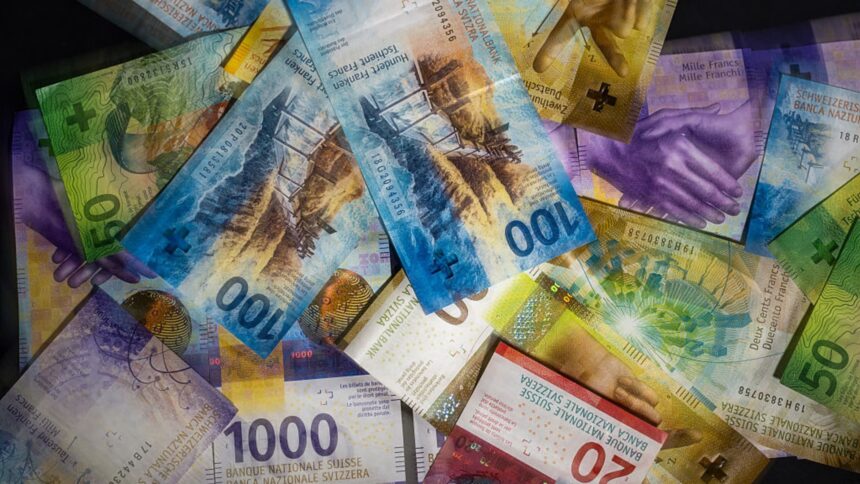
In contrast to the fluctuations seen in both the dollar and the yen, the Swiss franc has occupied a unique position in the currency landscape. Switzerland’s low debt levels and stable political environment have made the franc a reliable asset in uncertain times. In 2025, it appreciated nearly 13% against the U.S. dollar, reaching an 11-year high early in 2026. Nonetheless, this strength carries its own set of complications. As the franc continues to strengthen, concerns arise regarding its impact on Switzerland’s export-driven economy. With inflation at an unusually low 0.1% and a key interest rate set at 0%, any further appreciation of the franc could exacerbate disinflationary pressures.
The Swiss National Bank (SNB) has historically intervened in the foreign exchange market to stabilize the franc, yet the current geopolitical climate raises the stakes. Past interventions have led to tensions with the Trump administration, suggesting a cautious approach moving forward. SNB Chairman Martin Schlegel confirmed that the bank is prepared to intervene if necessary. However, economists at UBS predict that the SNB will react conservatively to the rising currency, allowing for sporadic interventions rather than broad-based actions.
Overall, while the Swiss franc has emerged as a preferred safe-haven currency amidst turmoil, the implications of its strength on the Swiss economy could prompt a reevaluation of monetary policy. As the dollar and yen face challenges in maintaining their appeal as safe havens, some market analysts view the franc as having solidified its position among G10 currencies as a superior store of value. The evolving currency landscape suggests that traditional perceptions are being tested as investors navigate a complex and shifting economic environment.