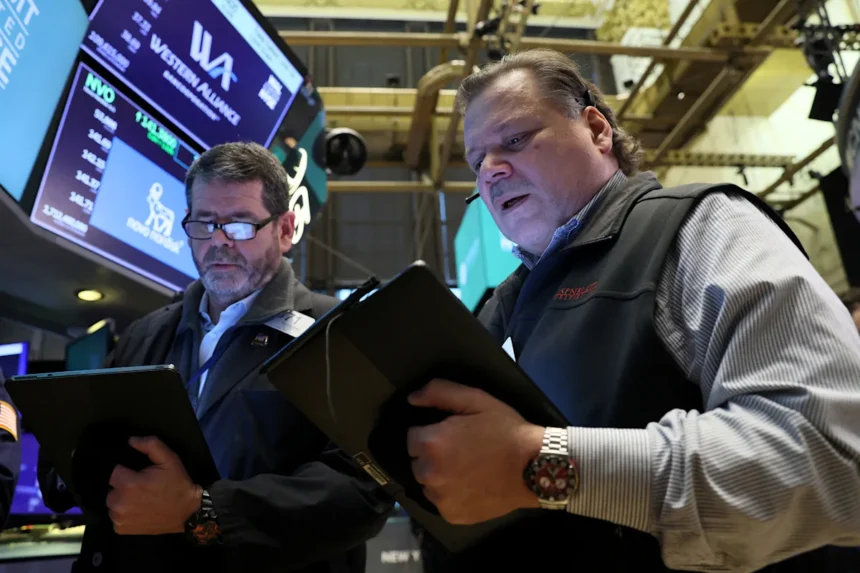
US stocks experienced a mixed close on Friday, marking the end of a volatile week amid rising interest rate concerns and shifting investor sentiment following a cooler-than-expected inflation report. The S&P 500 managed to close just above the flatline, while the Dow Jones Industrial Average posted a modest gain of 0.1%. Conversely, the tech-heavy Nasdaq Composite slipped by 0.2%. Over the week, both the Dow and S&P 500 recorded losses exceeding 1%, while the Nasdaq saw a decline of more than 2%.
The Bureau of Labor Statistics reported that the Consumer Price Index (CPI) rose by 0.2% in January compared to the previous month, bringing the annual increase down to 2.4%. This data is anticipated to influence the Federal Reserve’s approach to its monetary policy, with traders re-evaluating their expectations for interest rate cuts. Many are now anticipating a quarter-point reduction by June, and while the majority still project two cuts by the end of 2026, an increasing number of traders are predicting further reductions.
The sell-off in stocks was sparked by fears of disruptions from artificial intelligence (AI) technologies impacting traditional sectors, such as real estate, logistics, and transportation. This trend affected the market significantly, with all seven prominent tech companies, dubbed the “Magnificent Seven,” ending the day lower. Analysts suggest that the initial market reactions may be overstated, indicating that many industries could ultimately benefit from AI innovations in the long term.
On the earnings front, companies observed mixed results. Rivian saw its shares surge by over 25% after reporting better-than-expected fourth-quarter earnings and confirming that its R2 midsize model is on track for summer delivery. In contrast, shares for Pinterest plummeted after the company reported disappointing revenues and raised concerns about AI competition’s impact on its discovery platform.
Applied Materials also saw a significant boost in its stock, gaining more than 11% following strong earnings that reflected robust demand for its semiconductor equipment, which is integral to AI advancements. Meanwhile, Moderna’s shares climbed 10%, buoyed by quarterly revenue that surpassed expectations due to continuous demand for its COVID-19 vaccine.
In the cryptocurrency market, Bitcoin rebounded by 5% after the inflation report, with investors optimistic that pending legislation on digital assets would soon progress in Congress. This rise brought Bitcoin near $69,000 after dipping to $65,000 during a broader market downturn.
Conversely, Nvidia’s stock faced a decline of over 1% despite an overall increase in AI investment, continuing a trend of stagnation since reaching an all-time high last October. The company’s upcoming earnings report on February 25 is highly anticipated as investors look for signs of growth in its core AI hardware business.
As the trading session came to a close, the week exhibited a cautious sentiment among investors, highlighting an underlying tension regarding the lasting implications of AI technology on various sectors and the future direction of monetary policy. This week’s trading was further complicated by the upcoming closure of markets on Monday for Presidents’ Day.