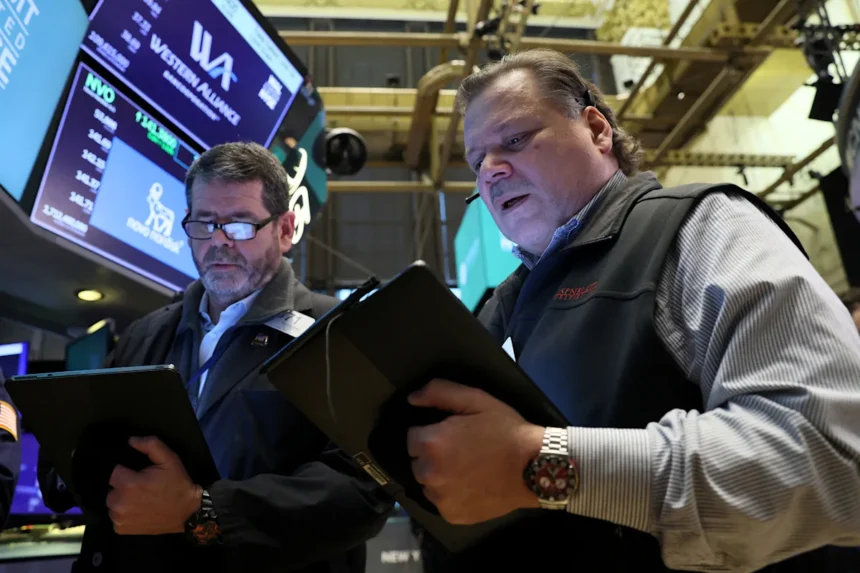
US stocks faced a mixed close on Friday, showing some volatility as investors processed a cooler-than-expected inflation report, contributing to sharp weekly losses for major indices. The S&P 500 fluctuated just above the flatline at the close, while the Dow Jones Industrial Average managed a modest increase of 0.1%. In contrast, the tech-heavy Nasdaq Composite fell 0.2%, underscoring a week marked by significant sell-offs, particularly in technology sectors.
Despite brief gains, both the Dow and S&P 500 ended the week down over 1%, and the Nasdaq experienced even sharper declines, losing more than 2%. The inflation data released by the Bureau of Labor Statistics revealed that consumer prices rose by 0.2% in January from the previous month and 2.4% year-over-year, which was more favorable than many analysts had anticipated. This report is expected to influence the Federal Reserve’s policy decisions, leading traders to increase bets on a possible interest rate cut in June, with a majority predicting a 25-basis-point reduction by that time.
Investor sentiment remained cautious after a day filled with heavy selling, driven by concerns about the impact of artificial intelligence (AI) disruption spreading into traditional sectors such as real estate and logistics, which were once considered stable. This shift in sentiment hammered “old economy” stocks alongside the feared tech giants. Notably, all members of the “Magnificent Seven”—the most notable tech firms—closed lower, reflecting growing apprehensions about the future of these stock values amid AI advancements.
Amidst this backdrop, several earnings reports showcased a mixed performance. Rivian’s stock surged more than 25% after the electric vehicle manufacturer reported strong quarterly results and confirmed deliveries of its R2 model are on target for summer. Similarly, Moderna’s shares rose by 10%, attributed to robust sales of its COVID-19 vaccine that exceeded revenue projections. On the other hand, shares of Pinterest tumbled over 20% after it reported earnings that fell short of expectations, igniting further fears about the risks posed by AI developments to its advertising platform.
Market analysts are also monitoring earnings closely as both a bellwether and a source of anxiety. While some firms like Applied Materials benefitted from the ongoing demand for chip manufacturing—seeing a stock increase of over 11%—others struggled. The broader stock market entered the trading day under significant pressure from prior heavy losses.
In addition to fluctuations on Wall Street, Bitcoin experienced a rebound of around 5%, riding on renewed hopes regarding potential crypto legislation that may clear congressional hurdles soon. Meanwhile, Nvidia’s shares declined over 1%, reflecting a trend of stagnation despite burgeoning AI investments, signaling investor uncertainty surrounding the tech giant’s trajectory, especially ahead of its earnings report due on February 25.
As trading closed, the market braced for a short week ahead, with the upcoming Presidents’ Day holiday expected to impact trading volume and sentiment. The ongoing discussions around inflation, monetary policy, and AI disruption suggest that volatility is likely to remain a theme in the near future, leaving many investors grappling with balancing optimism against caution.